Veterinary Clinic Cleaning
A vet clinic gets dirty in ways a medical practice never does. Fur works into every join, a nervous dog has an accident in the waiting room twice a week, and odour builds in soft surfaces long before anybody mentions it. Vet clinic cleaning has to deal with all three, using products chosen for floors that animals lie on and lick. Our crews handle the public and consult areas while your nurses keep the wards. This is one of our medical cleaning services.
What makes vet clinic cleaning different?
Three things a medical site never deals with at this scale: fur and dander that get into every join, accidents on floors and seating, and odour that builds in soft surfaces. All three need removal rather than covering up.
Walk into a busy Melbourne vet on a Saturday and the floor tells the story. Fur along the skirting, paw marks across the vinyl, a wet patch near the door that somebody has already mopped once. That is a normal morning, not a bad one.
Cleaning that environment means changing the order of operations. Dry removal comes first, because mopping fur turns it into a paste that sits in corners. Then surfaces, then floors, then odour control in the places where smell actually originates.
- Fur and danderVacuumed out of skirting joins, chair bases, vents and door tracks before anything wet is used.
- AccidentsRemoved, cleaned and treated at the spot, including the seam of the vinyl and the grout line.
- OdourTraced to its source, usually a soft surface or a floor join, then treated there rather than sprayed over.
How are waiting rooms, fur and accidents handled?
Dry first, wet second, seams always. Seating, bases and skirting are vacuumed, hard floors are cleaned into the edges and joins, and any spot with a history gets checked under light rather than assumed clean because it looks dry.
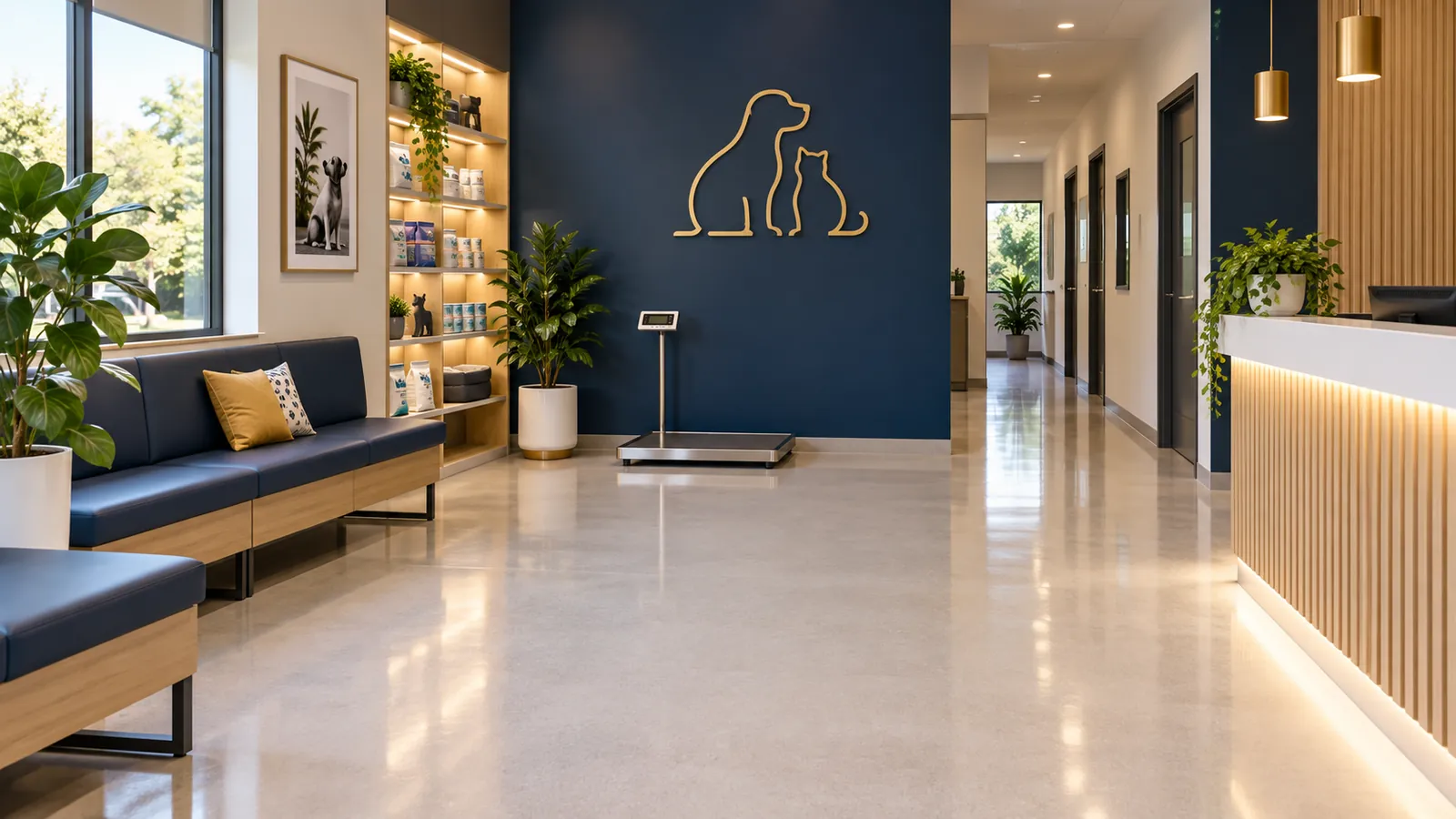
The waiting room decides what clients think of the clinic, and they judge it with their nose before their eyes. A room that smells is a room people talk about, and the smell almost never comes from where staff assume.
Most odour hides in three places: the seam where vinyl meets the wall, the underside of bench seating, and the base of the reception counter where a small accident once ran underneath. Our routine checks those specifically rather than cleaning the middle of the floor over and over.
Retail displays are the other front-of-house job. Vet clinics sell food, toys and flea treatments, and those shelves collect fur and dust at the same rate as everything else. Facings are wiped and the shelf edges cleaned rather than dusted around.
- Dry removalVacuum with a brush head across seating, skirting, tracks and vents.
- TouchpointsCounter, card terminal, door handles, leash hooks and the weigh scale surface.
- Floors and seamsCleaned into corners and wall joins, where fluid and fur collect together.
- Odour checkKnown spots checked each visit and reported when they need more than a routine clean.
What gets cleaned in consult and treatment surrounds?
The room around the work: table surrounds and bases, benches your nurses have cleared, cupboard fronts, bins, scales, door furniture and floors. Clinical equipment, surgical areas and anything used on an animal stays with the clinic team.
Consult rooms in a vet clinic turn over fast, and each patient leaves something behind: fur on the table, a claw mark on the vinyl, sometimes worse. Nurses clean between patients, and our job is the reset at the end of the day rather than the turnaround during it.
Tables are the point of care, so the split is written carefully. The base, the pedestal, the underside and the floor around it are ours. The table top and anything the vet uses on it belong to the clinic, cleaned to their protocol between animals.
Scales collect more than people expect. A walk-on scale in a corridor sees every patient in the building, and the join between the platform and the floor traps fur and fluid. It goes on the fixed list with the platform wiped and the join cleaned out weekly.
Door frames take a beating in consult rooms too. Dogs push against them, leads scrape them, and the lower half collects marks that a floor-focused clean never touches. They go on the weekly list.
Clipper stations are worth naming separately. Clipped fur is finer than shed fur, it travels on air, and it settles on every horizontal surface in the room including the tops of cupboards. Those get a wipe on the weekly rotation rather than waiting for someone to notice.
Cupboard fronts, drawer handles and the top of the bin are the touchpoints that matter in these rooms. Most staff will tell you the bin lid is the surface they least want to touch, and it is the one most likely to get skipped by a generic cleaner.
Which products are safe around animals?
Products chosen for surfaces animals contact, used at label dilution, and rinsed where the label requires it. Dogs and cats lie on floors and lick their paws, so residue matters more here than in any human setting.
We do not publish claims about what any product kills, and we would be cautious about a cleaner who does. What we can tell you is what we use, at what dilution, on which surface, and whether it needs rinsing. That sits on the product register your clinic keeps.
Your veterinary team sets the standard for the clinical side. If your practice specifies a particular product for consult tables or ward floors, we use yours rather than ours.
Dilution discipline is the practical risk. Doubling the strength of a floor product does not make a room cleaner, it leaves residue an animal will ingest, and it damages vinyl over time. Crews work to a measured dilution rather than by eye.
Where a clinic asks about disinfectant regulation generally, the TGA explains how listed disinfectants are regulated, although veterinary product choice is your practice's call, not ours.
Ours
- Waiting, reception and retail areas
- Consult room surrounds, floors and bins
- Corridors, staff areas and washrooms
- Kennel-adjacent corridors where the clinic agrees
Your nurses'
- Kennels, runs and isolation areas
- Surgical suite and prep benches
- Consult table tops between patients
- Clinical waste, sharps and specimens
What about kennel and ward areas?
Kennels, runs and isolation stay with your nurses by default, because those areas follow clinical protocols tied to patients in residence. We clean the corridors and service areas around them, and only take on more if the clinic asks and writes the protocol.
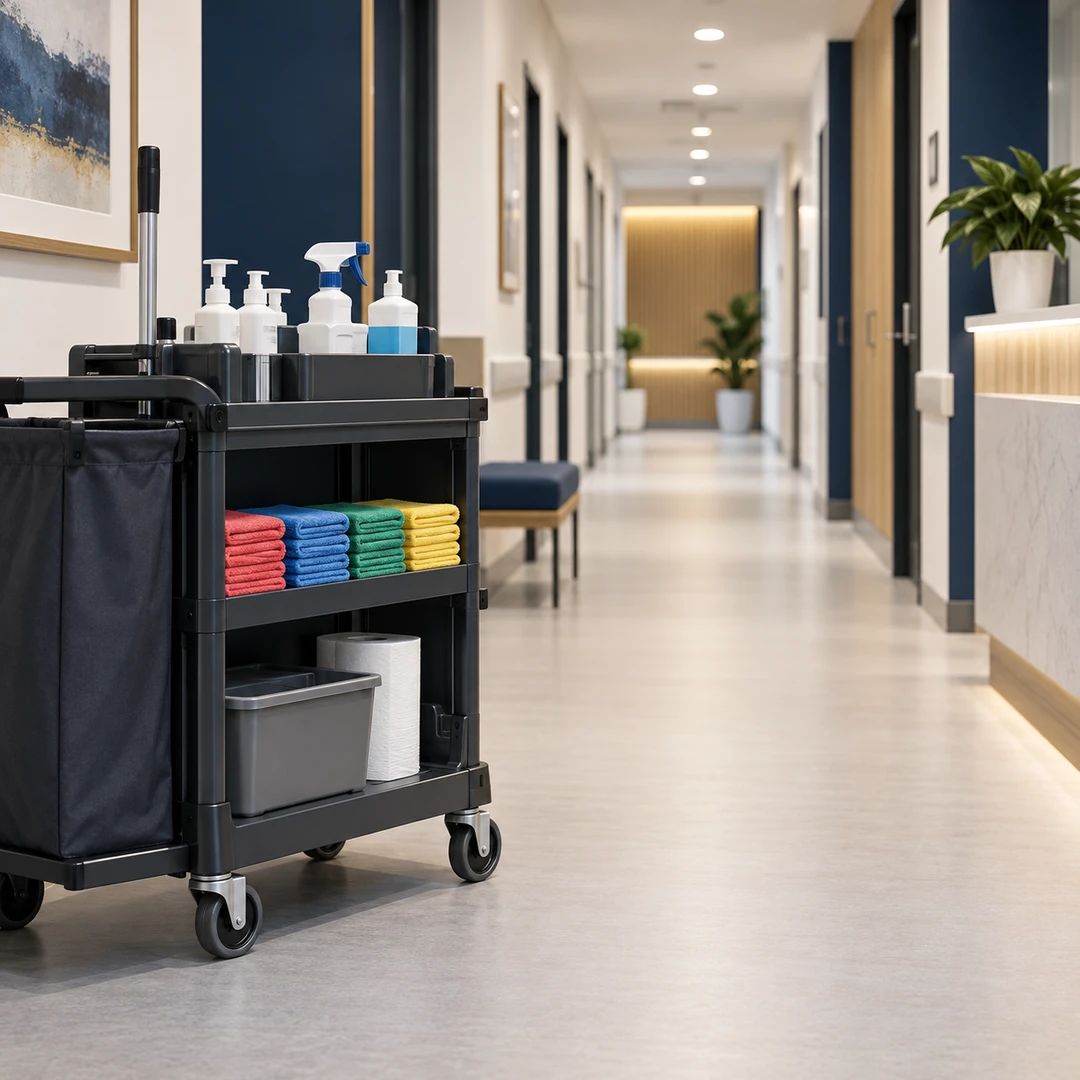
There is a practical reason for the boundary as well as a clinical one. Animals in a ward are stressed, and a stranger with a trolley at nine at night makes that worse. Nurses who know the patients handle those areas better than any contractor can.
What we do take on is everything around them: the corridor outside the ward, the laundry floor, the store room, the staff kitchen and the back entry where deliveries come in. Those areas carry fur and traffic and rarely get proper attention.
Laundries in vet clinics deserve their own mention. Bedding washing runs constantly, lint builds up fast, and the floor around the machines collects both fur and water. We clean the floor, the outside of the machines and the lint traps' surrounds, while the machines themselves stay with your team.
Clinics that want ward cleaning included can have it, on two conditions: the clinic writes the protocol and our crew is trained into it, and isolation remains off limits entirely. That arrangement is priced separately and reviewed after the first month.
What does vet clinic cleaning cost?
Floor area and consult room count set the base, then traffic volume, then flooring type. Clinics with carpet in the waiting area or worn vinyl in the corridors cost more, because both hold fur and odour and need periodic machine work.
| Driver | Effect | Typical fix |
|---|---|---|
| Patient volume | More fur, more accidents, more touchpoint work per visit | Daily visits rather than three a week |
| Carpet out front | Holds odour and fur that vacuuming alone will not lift | Extraction on rotation, or replace with vinyl |
| Worn vinyl or grout | Rough surfaces trap fluid and smell after cleaning | Machine scrub, then strip and seal where needed |
| Retail area | Shelving and facings add time out front | Weekly shelf rotation inside the visit |
| Ward scope | Only if the clinic asks, with training and protocol | Quoted separately, reviewed after a month |
Most clinics add a periodic reset for the front of house, covering seating, floor seams and the areas fur reaches over months. Those visits are booked as infection-control deep cleaning work, separate from the nightly figure, which is built the way our medical cleaning cost page describes.
How is a veterinary clinic quoted?
We walk the clinic after closing with your practice manager or head nurse, check floor types and the spots that smell, and settle exactly where the ward boundary sits. A fixed per-visit figure follows in writing within a day.
Bring your head nurse. They know which corner smells in summer, which consult room takes the anxious patients, and what the last cleaner kept getting wrong.
We also ask what products your clinic already uses, because matching them is usually simpler than introducing new ones into a building where animals live.
Our overall approach, including zoning and records, is set out on the page for medical cleaning in Melbourne.
To get moving, get a quote with your room count, opening hours and flooring type.
What do vet practices ask us?
Product safety, odour and whether we go into the wards. Those three come up in every first conversation, and all three are settled before a crew attends.
Are your products safe for animals?
We choose products for surfaces animals contact, use them at the dilution on the label, and rinse where the label says to. Your clinic approves the list before we start, and if your vets prefer a particular product for floors or tables, we use theirs instead of ours.
Can you get pet odour out of waiting rooms?
Usually, by finding where it actually sits. Odour hides in floor seams, under bench seating and at the base of counters, so those are treated directly rather than masked. Carpet holds it longest and often needs extraction, and badly worn vinyl sometimes needs replacing before any routine fixes it.
Do you clean kennels?
Not by default. Kennels, runs and isolation stay with your nursing team, who follow clinical protocols around patients in residence. We clean the corridors, laundry, storage and staff areas nearby. Clinics that want ward areas included can arrange it with a written protocol and crew training, priced separately.
Vet clinic that smells like a vet clinic?
It is usually fixable. Tell us the floor types and where the smell sits, and we will scope it properly.