Allied Health and Pathology Collection Cleaning
Allied health sites put several different cleaning problems under one roof. A physio floor is closer to a gym than a clinic. A podiatry room produces fine debris that settles into everything. A psychology room is judged on calm and privacy. A collection centre opens at seven and cannot be late. Allied health clinic cleaning has to handle all of that in one visit, without ever touching a specimen or a sharp. It is one strand of our medical cleaning services.
What does allied health clinic cleaning have to cover?
Four different room types with four different risks: rehab floors full of shared equipment, treatment rooms that generate debris, quiet consulting rooms judged on presentation, and collection areas where the boundary around specimens is absolute.
Most allied health sites in Melbourne share a building with someone else. A physio downstairs from a GP practice in Brunswick, a podiatrist and a psychologist either side of a corridor in Glen Waverley, a collection centre tucked into the front of a medical centre in Werribee. Each has different hours and different expectations, and the cleaning has to fit all of them in one run.
The method is the one we use everywhere: zones, colour-coded equipment, listed products where the risk sits, touchpoints before floors. What changes is where the risk actually is, and in allied health it is usually on equipment rather than on benches.
Physio and rehab
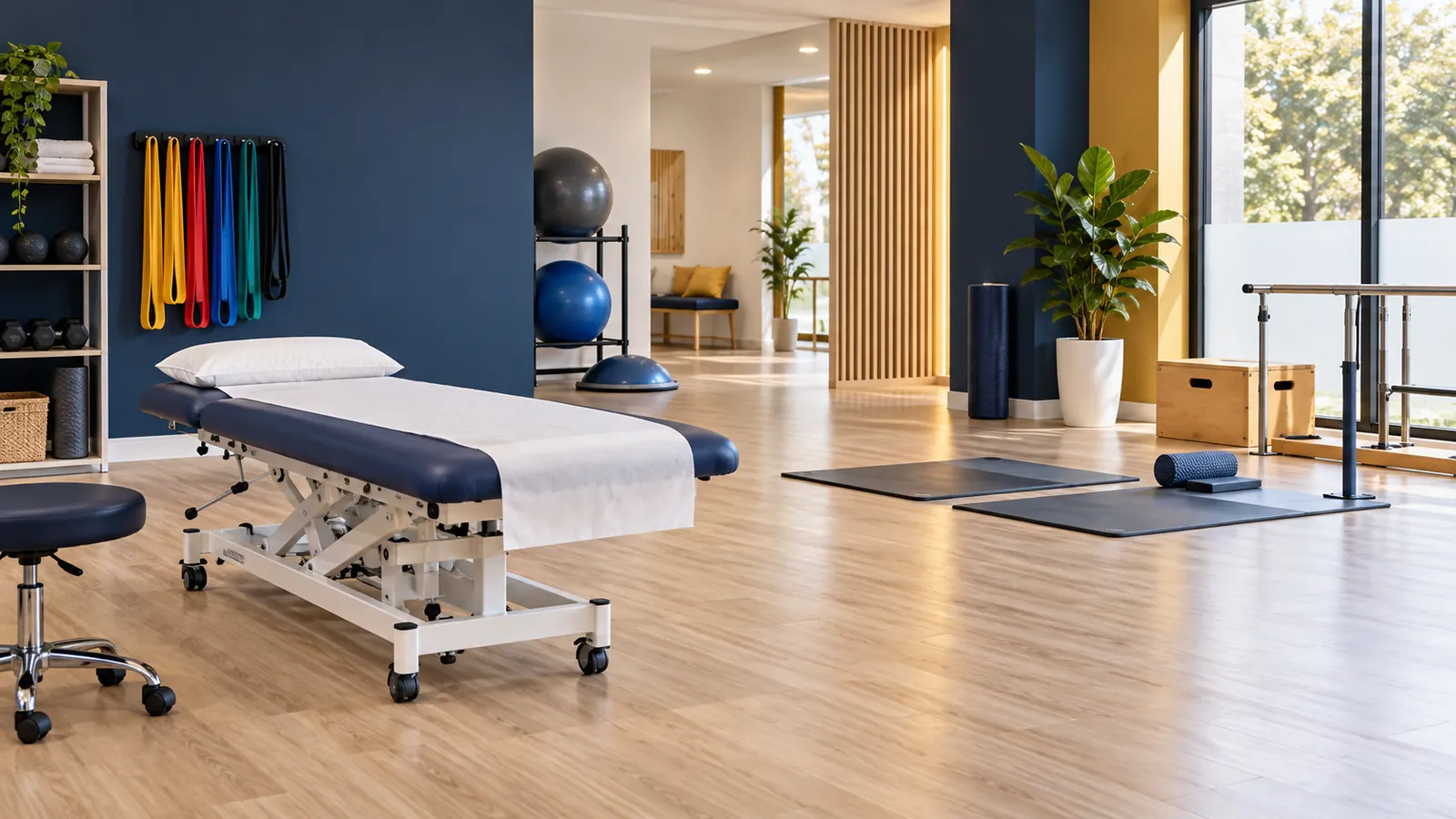
Plinths, pillows, exercise mats, weights, resistance handles, bike seats and grab rails. High contact, low visibility, and the first thing a client notices.
Podiatry
Treatment chairs, footrests, drill and debris zones, bins and the floor beneath the chair, where fine dust and nail debris settle.
Psychology and counselling
Soft seating, side tables, tissue stations, water points and door furniture. Quiet presentation matters more than visible activity here.
Pathology collection
Collection chairs, arm rests, benches, floors and waiting areas. Specimen handling, sharps and clinical waste stay entirely with the provider's staff.
How is physio and rehab equipment cleaned?
Equipment is treated as the primary surface, not as an obstacle around the floor. Plinths, mats, bolsters, weights, handles, bike seats and rails are wiped with a listed product every visit, and the floor is done afterwards.
Rehab spaces are where a medical cleaner has to think like a gym cleaner. Skin contact is constant, sweat is involved, and the surfaces are awkward: foam, vinyl, textured rubber and powder-coated steel, each needing a product that will not perish it.
Plinth vinyl is the most common casualty. Strong disinfectant used daily will crack it inside a year, which is why the product register names what goes on plinths specifically and why we check the manufacturer's guidance for the model in your rooms.
Mats need lifting rather than mopping around. Anything left on the floor gets moved, the floor underneath is cleaned, and the mat goes back. It takes an extra two minutes per mat and it is the difference between a rehab floor that stays fresh and one that develops a smell nobody can place.
- Plinths and bolstersWiped with the approved product, including sides and the head end.
- Handles and weightsGrip surfaces wiped every visit; racks wiped weekly.
- Mats and floorsMats lifted, floor cleaned beneath, mats replaced dry.
What changes in podiatry and treatment rooms?
Debris changes everything. Nail and skin debris from drills travels further than people expect, so the routine covers the chair, the footrest, the trolley body, the bin, the floor under and behind the chair, and the skirting on the wall behind it.
Podiatry rooms look tidy and hold debris in the places nobody looks: the join between the chair base and the floor, the underside of the footrest, the castor wheels of the trolley and the corner behind the door.
Our routine vacuums before it wipes in those rooms, because pushing fine debris around with a damp cloth spreads it rather than removing it. The bin is emptied and the bin body wiped, not just re-lined.
Instruments, drills and anything reprocessed belong to the practitioner, and the sterilising area is cleaned only on the outside once it has been cleared. Chiropractic and osteopathic tables fall into the same category as plinths: wiped with the approved product, checked for wear, and reported if the vinyl starts to split.
Dust extraction units attached to podiatry drills are maintained by the practice. We clean the outside of the unit and the floor around it, and we report a full collection bag rather than emptying it.
Chair upholstery in podiatry takes a beating from foot cream, antiseptic and the odd drop of blood, so it is checked every visit and reported when the vinyl starts to lift at the seams.
Where a practice runs a shared treatment room across several practitioners, we set the room back to a neutral state each night so the first practitioner of the day starts from a known position rather than from someone else's set-up.
How are pathology collection centres cleaned?
To the provider's protocol, before opening, and never near a specimen. Collection chairs, arm rests, benches, trolleys, floors and waiting areas are cleaned. Everything else, from samples to sharps containers to the fridge contents, belongs to the collection team.
Collection centres run to a hard clock. Many open at seven, patients arrive fasting and irritable, and a centre that is not ready loses its morning. So the visit is scheduled to finish before opening, not to start near it.
The protocol comes from the pathology provider rather than from us. Before the first clean we ask for it in writing, confirm which surfaces we may touch, and record any product restrictions on the register.
The products themselves are listed ones, carrying an AUST L number, and the TGA explains how listed disinfectants are regulated if your provider asks what we bring in.
The boundary is absolute and it protects everyone. Specimens are never moved, even to clean a bench. Sharps containers are never touched, full or empty. Fridges are cleaned on the outside only. Clinical waste stays where the provider's own contractor collects it.
Diagnostic testing sites are a different environment again, with their own controls, and they sit outside what we take on. Collection rooms inside a practice or a shopping strip are the part of pathology we clean.
- Crew arrivesAlarm off, handover book read, kit staged in the corridor.
- Collection roomsChairs, arm rests, benches, trolley bodies, floors.
- Waiting and toiletsSeating, counter, glass, washroom with the red kit, restock.
- Log and outConsumables noted, log signed, site secured before opening.
What do psychology and consulting rooms need?
Discretion and a calm finish. Soft seating, side tables, tissue and water stations, lamps and door furniture are cleaned, the room is reset exactly as the practitioner left it, and nothing on a desk is moved, read or tidied.
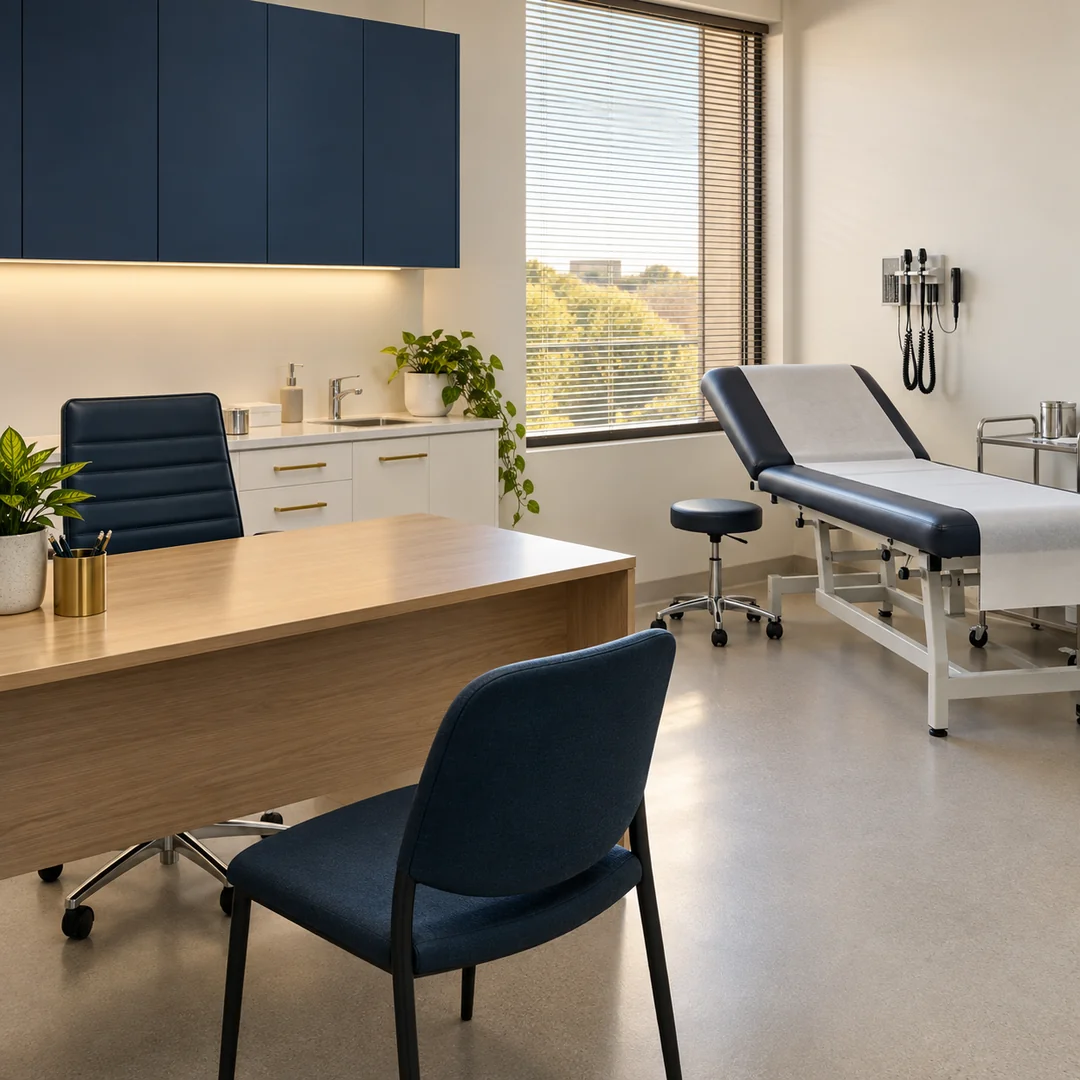
Psychology rooms are cleaned for feel as much as for hygiene. A client arriving for a difficult session notices a smeared window, a dusty lamp shade or a tissue box that is empty, and each of those quietly undermines the room.
Fabric is the challenge. Upholstered chairs cannot take a clinical disinfectant, so they are vacuumed and spot cleaned on a cycle, with steam cleaning arranged periodically where the practice wants it.
Lighting matters too. These rooms usually run lamps rather than downlights, and a dusty shade changes the quality of the light in a way people feel without identifying. Shades are dusted on the weekly rotation.
Privacy is the other half. Crews are briefed that notes, screens, appointment books and anything on a desk stays untouched. If a surface cannot be cleaned without moving paperwork, it is left and noted in the log rather than cleared by a cleaner.
What does allied health cleaning cost?
Equipment volume and start time drive it more than floor area. A rehab gym with forty pieces of equipment takes longer than a suite of four consulting rooms, and a pre-dawn finish before a collection centre opens carries an early-start premium.
| Driver | Why it matters | Where it bites |
|---|---|---|
| Equipment count | Each item is a surface with its own product and method | Rehab gyms and shared exercise areas |
| Debris load | Vacuuming before wiping adds time per room | Podiatry and chiropody rooms |
| Start time | Pre-dawn crews cost more than an evening shift | Collection centres opening at seven |
| Soft furnishings | Vacuum, spot clean and periodic steam rather than a wipe | Psychology and counselling rooms |
| Shared tenancy | Separate scopes and records per practitioner | Multi-discipline floors |
Sites with heavy equipment use often add a periodic reset that covers frames, racks and the parts of the floor a nightly visit cannot reach. That runs as an infection-control deep cleaning attendance. The way a per-visit figure is assembled is set out under medical cleaning cost.
How do we quote a set of allied health rooms?
We count rooms and equipment, check what the plinth and chair manufacturers allow, confirm the earliest time the site must be ready, and agree the collection-room protocol with your pathology provider if you have one on site.
Half an hour on site is usually enough, and it works best with the practitioner who uses the busiest room. They know which equipment gets handled most, which surfaces have been damaged before, and where debris ends up.
Multi-discipline sites get one scope per tenancy so each practitioner can change frequency without involving the others.
Sites that need a fixed early-morning roster run under after-hours medical cleaning programs, which covers relief cover and consistency of crew.
To begin, get a quote with your room list and opening time, or read the wider approach behind medical cleaning in Melbourne.
What do allied health practices ask?
Whether equipment is included, whether we can finish before an early opening, and what happens around specimen areas. All three are settled in the scope, and the short versions are below.
Do you clean rehab gym equipment?
Yes, equipment is part of the standard list rather than an extra. Plinths, bolsters, mats, weights, grip handles, bike seats and rails are wiped every visit with products approved for those surfaces, and racks and frames are covered on a weekly rotation.
Can you finish before 7am opening?
Yes. Collection centres and early-opening clinics are cleaned on a pre-dawn shift that finishes before staff arrive, with the site secured and the log left on the bench. Early starts carry a premium, which is shown as its own line in the quote.
Do you handle specimen areas?
We clean the room and its surfaces, never the specimens. Samples, racks, sharps containers, fridges and clinical waste are handled only by collection staff. Where a bench holds specimens at the time of our visit, that bench is left and the reason recorded in the log.
Physio, podiatry, psychology or collection rooms?
Send the room list and your opening time. We will build the schedule backwards from when you need to be ready.