Specialist and Day Clinic Cleaning
Clinics sit between a consulting suite and a day hospital. There is a procedure room, usually a recovery area, a fitted-out front of house that clients judge on sight, and a list that runs to a timetable. Our medical clinic cleaning services are written for that mix: clinical method where the risk is, presentation standards where the client is looking, and a schedule that respects the list. This page sits inside our wider medical cleaning services.
What do medical clinic cleaning services actually cover?
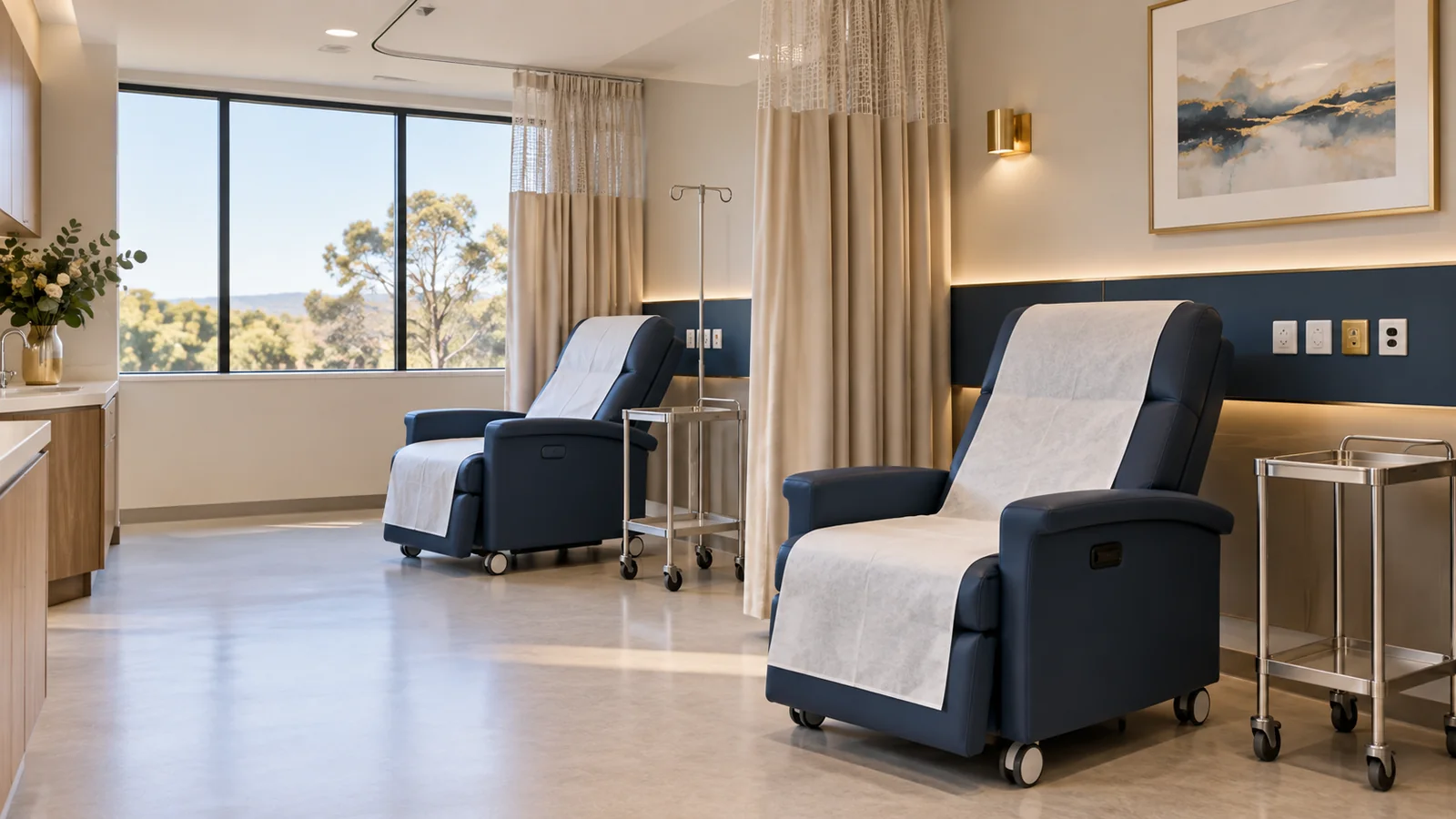
Everything around the clinical work: procedure room floors, benches, surrounds and fixtures once staff have cleared them, recovery bays, consult and treatment rooms, the retail-style front of house, bathrooms, and the staff areas behind the scenes.
A clinic has three distinct territories, and most cleaners only see one. There is the clinical territory, where the work happens and where products, order and contact times are not negotiable. There is the client territory, which is the reception, the waiting area and the bathroom people use before an appointment they may have saved for. And there is the back of house, where staff eat, store stock and process paperwork.
We write a scope that treats those three differently, because they fail differently. A clinical miss is a risk issue. A front-of-house miss is a revenue issue, since a cosmetic client who notices a dusty skirting board will not say anything, they will simply book somewhere else. A back-of-house miss is a staff morale issue, and it is the one most cleaners let slide.
Melbourne clinics often sit in converted retail or period buildings, particularly through Armadale, Toorak Road and the top end of Collins Street. Those fit-outs bring timber, polished concrete, feature tiling and a lot of glass, which are all lovely and all need specific products. We note the finishes at the walk-through rather than discovering them with the wrong chemical. The rest of this page follows that order: clinic types, the boundary around procedures, recovery, presentation, scheduling and price.
Where the clinical standard is concerned we work to published guidance rather than house rules. Treatment-area disinfectants are listed products, identified by the AUST L number printed on the label, and the TGA sets out how listed disinfectants are regulated in Australia. Anything we bring on site is on your product register with its data sheet.
| Clinic | Clinical zones | Usual pattern |
|---|---|---|
| Skin and cosmetic | Treatment rooms, minor procedure room | Nightly, with presentation list out front |
| Fertility | Consult, collection and procedure rooms | Nightly, quiet rooms reset daily |
| Imaging | Scanner rooms, change cubicles, gowning | Nightly, cubicles wiped between sessions by staff |
| Sleep | Bedrooms, ensuites, monitoring room | Daytime, after patients leave in the morning |
| Physio-led day clinic | Plinth rooms, gym floor, hydrotherapy | Nightly, equipment wiped on rotation |
Which clinics do we service?
Skin and cosmetic clinics, fertility clinics, imaging practices, sleep clinics and physio-led day clinics are the regulars. Licensed day procedure centres are a different scope and are handled through their own page rather than quoted from this one.
Skin and cosmetic clinics
Treatment rooms with lasers, injectables and minor excisions, plus a front of house styled like a salon. Surfaces near the chair get clinical treatment, the rest gets polish.
Fertility clinics
Consult rooms, collection and procedure areas, and quiet spaces where privacy matters more than speed. Scientific and embryology areas stay with the clinic's own staff under their own protocols.
Imaging and radiology
Scanner rooms, change cubicles, gowning areas and waiting rooms that hold people for longer than most. Equipment is cleaned around, never wiped by us.
Sleep clinics
Overnight bedrooms with linen, ensuites and monitoring rooms. These sites clean during the day rather than after hours, which changes the whole schedule.
Physio-led day clinics
Plinth rooms, a gym floor with shared equipment, and hydrotherapy in some sites. Mats, weights and handles carry the contact rather than the floors.
Multi-specialty day clinics
Several disciplines sharing one floor, each with its own equipment and turnover rhythm. Scoped room by room so nothing falls between tenants.
Sites holding a day hospital licence work to a different scope, and the conversation starts with your nurse unit manager instead. Those facilities are covered by day surgery cleaning, which is quoted only after the split between our crew and your staff is agreed in writing.
Where exactly does our work stop in a procedure room?
At the procedure field and anything used inside it. We clean the room: floors, walls where marked, benches, trolley bodies, chair or table bases, lighting arms, bins and door furniture. Instruments, consumables, reprocessing and the sterile field itself belong to clinic staff.
Ours, once the room is cleared
- Floors, including under the chair or table
- Benches, sink surrounds and splash zones
- Trolley bodies, drawer fronts and handles
- Chair or table base, arms and footrest
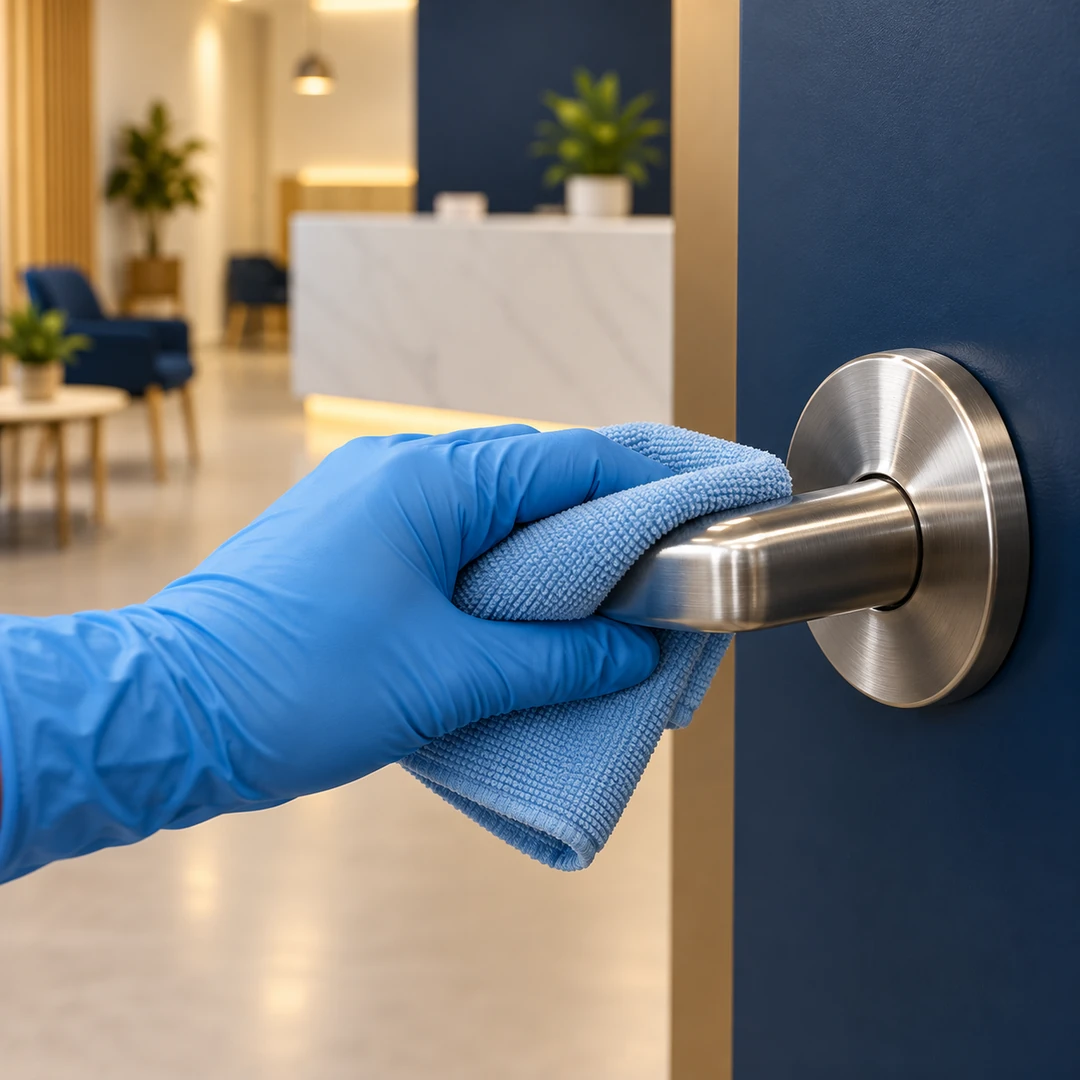
- Light arms, switches, door furniture, bins
Never ours
- Instruments, handpieces and probes
- Reprocessing, sterilising and packing
- The sterile field and anything on it
- Sharps, clinical waste and specimen handling
- Device screens and settings of any kind
The clearer version of the rule is this: if it touches the patient during the procedure, or if it goes through a reprocessing cycle, it is not ours. Everything that holds it, surrounds it or supports it is.
That line is written into the scope for each room, and the crew is briefed on it at induction. It also appears in the visit log, so if a task was declined the reason is recorded rather than left as a gap.
Clinics sometimes push on this, usually with good intentions. A nurse running late asks whether the crew can wipe down the laser handpiece or flush a suction line. The answer is always no, and it is not a service limitation, it is the point of having a boundary at all.
Where a room needs more than the nightly routine after a busy list or an incident, that is scoped as an infection-control deep cleaning visit with the areas, products and sequence agreed with your clinical lead beforehand.
How are recovery and consult areas handled?
Recovery gets the same attention as a treatment room, because patients sit there for an hour with a cannula and a blanket. Chairs, side tables, call buttons, footrests, the blanket store and the floor beneath each bay are cleaned at every visit, and the bay is reset ready for the next list.
Recovery is the area clinics most often underestimate. It looks like a lounge, so it gets cleaned like one. In practice it holds people who have just had something done to them, who touch the chair arms constantly, who use the bin beside the chair, and who sometimes bleed a little or feel sick.
So it is treated as clinical. The chair is wiped down including the underside of the arms and the footrest mechanism, the side table and any jug or cup station is cleaned, the call button is disinfected, and blanket stock is counted rather than assumed. Where curtains divide the bays, tracks and leading edges get wiped, and the curtains themselves go on a laundering cycle your clinic controls.
Consult rooms in a clinic are usually busier than in a suite, because they double as assessment and follow-up space. The desk, the chair the patient uses, the examination couch and the hand basin are on the fixed list, and the mirror gets attention in cosmetic settings where clients use it.
Cannula trolleys and observation stands sit in recovery too, and they are cleaned as furniture rather than as devices: the frame, the wheels, the handle and the tray base, with anything clinical left for your nurses.
Bins beside recovery chairs deserve a line of their own. They fill with gauze, wrappers and sometimes more, and they are the first thing the next patient looks at. Liners are changed every visit whatever the level, and the bin body is wiped rather than just re-lined.
Soft furnishings are where clinics and cleaners fall out. Fabric recovery chairs cannot be disinfected like vinyl, so either the clinic accepts a fabric-safe product with steam cleaning on a cycle, or the chairs get replaced with wipeable ones. We say which at the quote, not later.
Why do cosmetic clinics need a higher presentation standard?
Because clients read the room the way they read a hotel. Glass, mirrors, feature walls, skirting boards, pendant lights and the underside of reception joinery all get noticed, and a clinic charging premium fees cannot afford a finish that says otherwise.
Clinical safety and visual presentation are different jobs, and a crew trained only in one will fail the other. A room can be perfectly disinfected and still look tired, and a room can gleam while the chair arms were never wiped. Clinics need both, done in the right order, by people who know which product touches which surface.
The presentation list runs alongside the clinical one. It covers the things clients notice from a seated position, which is a different set of surfaces from the ones you notice standing up during a walk-through.
- Glass and mirrorsStreak-free, including the lower third where hands and trolleys mark them.
- Joinery edgesReception fronts, drawer pulls and the underside of counters at seated eye level.
- Floors and skirtingPolished concrete, timber and tile each get the right product, with skirting done weekly.
Product choice does most of the work here. Ammonia on a mirrored splashback, a general spray on brushed brass or a wet mop on engineered timber will each leave a mark that no amount of effort removes afterwards, and replacing a feature finish costs more than a year of cleaning.
So the walk-through includes a short finishes list: what each surface is, what goes on it, and what never does. It lives with the zone plan, and it is the first thing a relief cleaner reads.
Presentation work is also what makes a clinic photograph well. Sites that run social media or before-and-after galleries usually ask for a deeper front-of-house clean before a shoot, which we schedule as an extra visit rather than squeezing into the nightly hour.
How do we schedule around a procedure list?
The full clean runs after the last patient leaves. Where lists run back to back, a short mid-day reset covers the procedure room surrounds, recovery bays and bathrooms between sessions, with a task list agreed in advance so it fits the gap you actually have.
Clinic lists move. A cosmetic clinic might run 8am to 8pm on Thursday and finish at two on Friday, and a fertility clinic works to a cycle rather than a roster. The cleaning schedule has to bend around that without anyone renegotiating each week.
We set fixed nights with variable start times, and the clinic tells us the finishing time each week through whoever runs the diary.
Public holidays and the Christmas shutdown need agreeing in advance as well. Clinics that close for a fortnight usually want a deep clean on the last day and a light reset the day before reopening, rather than paying for visits to an empty building.
Cancelled lists cut both ways. If a Thursday list is called off we would rather know by mid-afternoon, because the crew can be redirected and you are not paying for a full clean of rooms nobody opened. The reverse also holds: an extra list added on the day usually means an extra hour that night.
Sleep clinics invert the whole model. Patients leave in the morning, so the clean happens during the day, linen is stripped and beds remade, and the ensuites are turned over like small hotel rooms before the next night's admissions.
Start times are the earliest a crew may begin, not a promise the building is empty. Where a practitioner is still writing notes at eight, the crew starts elsewhere on the floor and comes back, which is written into the run sheet rather than left to judgement.
Mid-list resets are short and specific. Twenty minutes, a defined list, and out before the next patient walks in. That works when the list is written down and everybody agrees what is in it. It does not work as an open-ended request to tidy up.
Six and seven day clinics generally settle into a standing roster, same faces, same nights. How we structure those, and who covers a shift when somebody is away, is explained under after-hours medical cleaning programs.
What drives the price of clinic cleaning?
The clinical share of the floor comes first, then the recovery bay count, then the finishes out front. A clinic with two procedure rooms, six recovery chairs and a glass-heavy reception takes noticeably longer than a consulting-only practice of the same footprint.

Procedure rooms cost time because of sequence and contact times, not because they are large. A ten square metre procedure room can take longer than a thirty square metre waiting area, and clinics that budget by floor area always find that surprising.
Recovery adds bay by bay. Each chair is a small clinical unit with its own surrounds, and six bays is six times the work rather than one big room.
Finishes matter out front. Polished concrete and large-format tile are quick. Feature timber, brass fittings, textured stone and floor-to-ceiling glass are not, and they need products that will not damage them, which rules out the cheapest approach.
Frequency is the other half. Clinics running five or six lists a week rarely manage on three visits, because recovery and procedure surrounds do not tolerate a day off. Two or three visits suits consulting-heavy clinics with a light procedure load.
Mid-list resets, deep-clean cycles and pre-shoot presentation cleans are quoted as separate line items so you can turn them on and off without renegotiating the whole contract. The per-visit logic behind all of it is explained on our page about medical cleaning cost.
How do we quote a specialist clinic?
We walk the clinic with whoever runs the floor, count procedure rooms and recovery bays, note every finish out front, and put the boundary around clinical work in writing. A fixed per-visit price comes back the next working day.
Bring your clinical lead to the walk-through if you can. Ten minutes with the person who actually runs the procedure room settles more than an hour of email, particularly around what gets cleared before we arrive and what never gets touched.
Expect us to ask what has gone wrong with cleaning here before. Clinics usually have a specific complaint behind the enquiry, whether that is dust on a feature wall, a recovery bay that never quite looks reset, or a cleaner who kept moving equipment. Knowing it shapes the scope.
We will also ask about your busiest day, your quietest day and what happens on Saturdays. Clinics often have a weekly rhythm that the schedule should follow rather than fight.
If you want the method before the numbers, our overview of medical cleaning in Melbourne sets out the zoning, the products and what lands in your records folder.
When it suits, get a quote with your room count, your list pattern and the finishes out front, and we will bring the right products to the walk-through.
What do clinic managers ask before booking?
Three things: how far into the procedure room we go, whether we can work around a running list, and whether we understand the presentation standard a cosmetic clinic needs. Answers below, in short form.
Do you clean procedure rooms?
We clean the room, not the procedure. Floors, benches, sink surrounds, trolley bodies, chair bases, light arms, bins and door furniture are ours once staff have cleared the space. Instruments, reprocessing, the sterile field, sharps and clinical waste stay with your clinical team at all times.
Can you clean around our procedure list?
Yes. The main visit runs after your last patient, and clinics with back-to-back lists can add a short mid-day reset covering procedure surrounds, recovery bays and bathrooms. That reset list is fixed beforehand, sized to the break you actually have, so it never runs into the next patient.
Do you service cosmetic clinics?
Yes, and they get a presentation list alongside the clinical one. Glass, mirrors, joinery edges, feature finishes and skirting are cleaned to a standard clients notice, using products chosen for the surface. We can also add a deeper front-of-house clean before photography or an open day.
Running a clinic that needs both standards?
Clinical method where it matters, presentation where clients look. Tell us the room mix and we will price it.