After-Hours Medical Cleaning Programs
Anyone can clean a practice once. Doing it identically on a wet Tuesday in July, with a relief cleaner, while the regular crew is on leave, is the part that decides whether a practice stays happy. A medical cleaning contract with us is a written program: fixed nights, a zone-by-zone scope, the same crew wherever possible, consumables handled, logs left behind and a price that holds. It sits under our medical cleaning services.

Why do practices move to a medical cleaning contract?
Because consistency is what they are actually buying. A one-off clean fixes a building for a day. A program holds it, keeps the same people walking through your rooms, and produces the unbroken record an accreditation file needs.
Patients reset their opinion of a practice every morning. Whatever happened yesterday, the room they walk into at nine is the practice they describe to a friend, which is why daily coverage matters more in healthcare than in an office where nobody visits.
There is a compliance angle as well. Environmental cleaning sits inside standard precautions in the Australian Guidelines for the Prevention and Control of Infection in Healthcare, and a practice assessed on systems needs the schedule and the record, not just a clean room on the day.
Staff feel it too. A practice nurse who knows the treatment room will be right at eight stops checking, and that recovered time is worth more than the difference between two quotes.
There is a staffing argument as well. Crews that work the same sites keep the knowledge: which door sticks, where the spare liners live, which consult room the nurse uses for dressings. A contractor rotating unfamiliar people through your practice loses all of that every week.
- ConsistencySame crew, same sequence, same standard, whoever is rostered on a given night.
- Continuity of recordAn unbroken log across the year rather than receipts from whoever was available.
- Fewer decisionsConsumables, rotations and deep cleans sit inside one arrangement rather than five conversations.
What does the daily scope cover, zone by zone?
Waiting and reception, consult rooms, clinical rooms, washrooms and staff areas, each with its own colour, product set and position in the order. Touchpoints and restocking happen every visit; heavier tasks sit on weekly, monthly and quarterly rotations.
| Zone | Every visit | Weekly or monthly |
|---|---|---|
| Waiting and reception | Counter, terminal, chairs and arms, glass, toys, floors, bins | Upholstery vacuum, entry matting, high dusting |
| Consult rooms | Desk, keyboard, phone, couch, basin, handles, floor | Skirting, chair bases, blind wipe, under furniture |
| Clinical rooms | Couch, trolley tops, bench, sink surround, disinfected to label time | Wall marks, vent faces, behind the couch |
| Washrooms | Pan, basin, taps, dispensers, mirror, floor, full restock | Descale, grout, exhaust face, door track |
| Staff areas | Benches, sink, fridge handle, microwave, table, floor | Inside microwave, cupboard fronts, fridge exterior |
The rotation is what separates a program from a nightly tidy. Skirting boards, chair legs, vent faces and the tops of cupboards are on a written cycle with dates, so they happen whether or not anyone notices them.
Frequency is set per zone rather than for the whole site. Washrooms and clinical rooms rarely drop below daily in a practice that opens five days, while a rarely used meeting room might sit on a weekly line. Writing it that way keeps the price honest and the cleaning where it matters.
Practices see the cycle rather than taking it on trust. The schedule sits in the site folder next to the zone plan, and the monthly summary says which rotation items were completed.
Anything outside the rotation gets quoted rather than absorbed. A carpet that needs extraction, a wall that needs washing after a fit-out, or a storeroom nobody has emptied in three years are separate jobs with their own prices, and saying so up front is cheaper for everyone than discovering it at renewal.
How is after-hours access and security handled?
Keys and fobs are signed out against a register, alarm codes are individual where your system allows it, crews sign in and out, and nobody except rostered staff holds access to your practice. Lost keys are reported immediately, not at the end of the week.
- Keys and fobsIssued by name, logged in a register, returned when someone leaves the roster.
- Alarm codesIndividual codes where the panel supports them, so your reports show who entered and when.
- AttendanceSign in and out each visit, recorded on the log that stays at the practice.
- IncidentsAnything unusual, such as a door left open or an alarm fault, reported that night.
Privacy is the part practices worry about most, and rightly. Crews are briefed that screens, files, appointment books and anything on a desk are not touched, moved or read. Where a bench cannot be wiped without shifting paperwork, it stays untouched and the log explains why.
Buildings with their own security add a second layer: contractor registration, after-hours passes and lift bookings. We handle that with building management directly, and we keep the certificates current so nobody is refused entry six months in.
Can consumables sit inside the contract?
Yes. Hand soap, sanitiser, hand towel, toilet tissue and liners can come from us at cost on the monthly invoice, or straight from your own store. Either way, levels are checked every visit and recorded, so nothing runs out quietly.
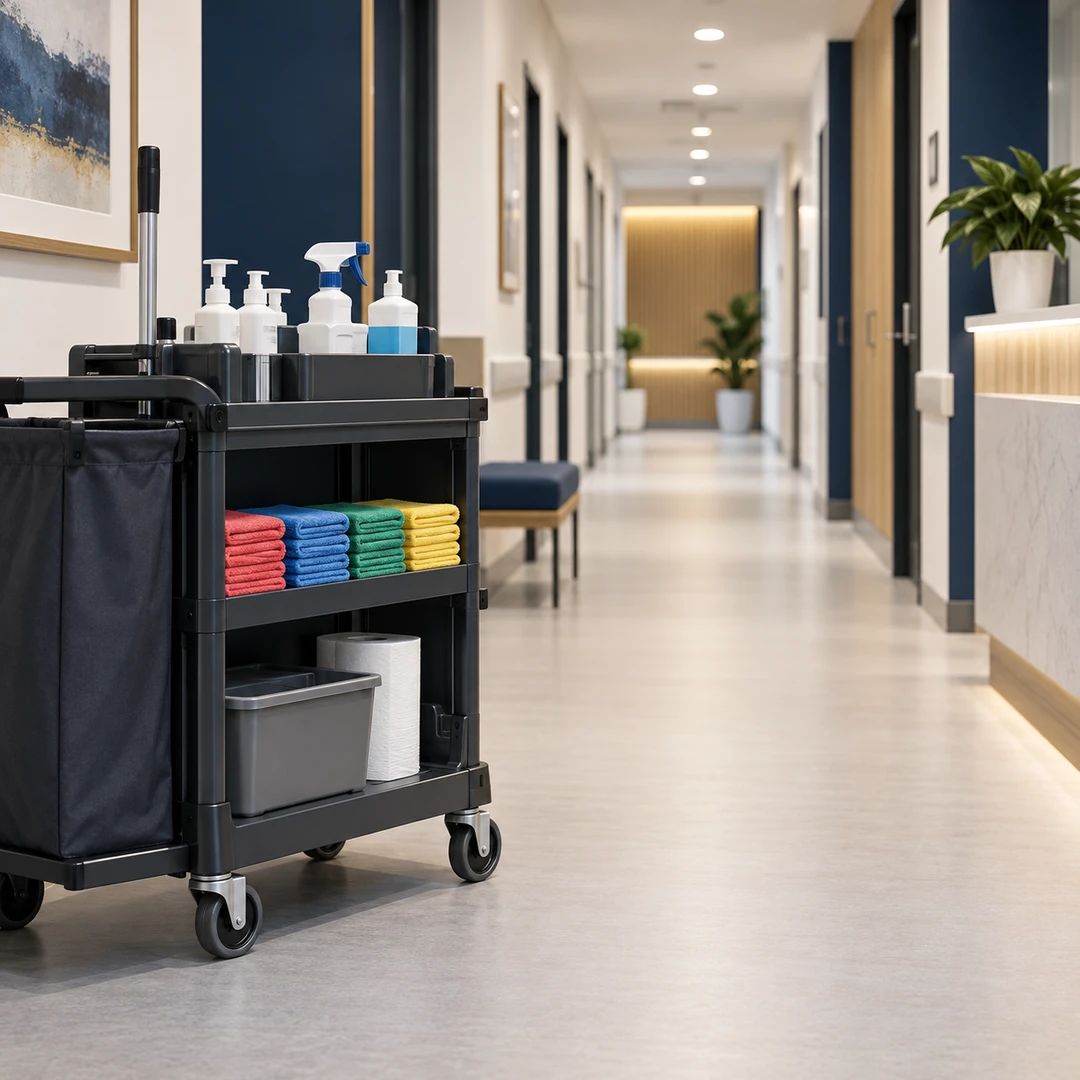
Running out of hand towel in a medical practice is not a minor irritation. It interrupts hand hygiene at the exact moment it matters, and it is the kind of thing an assessor notices on the day they visit.
Practices that supply their own stock usually do it because they have negotiated a price or because they want a specific product. That is fine, and it does not change the checking: the crew still counts what is there and records it.
Where we supply, it goes on the monthly invoice at cost with the quantities listed. No markup buried in the cleaning rate, and no surprise deliveries of product nobody asked for.
Usage tells a story as well. A washroom burning through twice the hand towel of a comparable practice usually has a dispenser fault or a delivery problem, and that shows up in the monthly figures before anyone notices it at the basin.
Dispensers themselves get checked too. A soap dispenser that has been dripping for a month wastes more product than the practice thinks and leaves a mess somebody has to clean.
How does the deep-clean cycle attach to a program?
As a scheduled add-on, usually quarterly, locked into the year planner when the program starts. The nightly program holds the baseline, and the periodic attendance resets what a nightly visit can only reach on rotation.
Putting the dates in early matters. Practices that leave it open end up chasing a full reset in the week before an accreditation visit, when every contractor in Melbourne is booked and no room can be spared.
The scope for those attendances, and what separates a real reset from the fogging theatre, is set out under infection-control deep cleaning. Floor restoration, carpet extraction and upholstery work usually ride along with it.
Most programs also carry a small allowance for the unexpected: a spill needing more than the routine, a room after a difficult patient, a post-works clean when the landlord replaces a ceiling tile. Those are called on when needed and charged at the contract rate.
Practices with several sites often stagger the cycle so one building is reset each month rather than three in the same week, which spreads both the cost and the disruption.
Multi-site practices also want one invoice and one contact rather than three accounts. That is how we set them up, with each site keeping its own zone plan, log and summary underneath.
Seasonality is worth planning for too. Winter brings respiratory load through waiting rooms and summer brings floors marked by wet weather and sand from the bay suburbs. Most practices put one reset at the end of winter and one before the Christmas close, which is when the building gets its quietest week.
What are the terms, the pricing and the logs?
A fixed price per visit held for twelve months, billed monthly in arrears, with thirty days notice either way and no lock-in beyond that. Every visit leaves a signed log, and every month brings a summary including anything missed.
Pricing
Fixed per visit, quoted against the written scope. Held for twelve months, then reviewed with notice before any change applies.
Notice
Thirty days either way. No multi-year lock-in, because a contract nobody can leave is a contract nobody maintains.
Billing
Monthly in arrears, with consumables itemised at cost if we supply them, and any called-on work shown separately.
Records
Signed visit log on site, product register with data sheets, monthly summary listing completed rotations and exceptions.
Missed tasks are handled in writing rather than by apology. If something is skipped, it appears in the log that night with the reason, it is corrected at the next visit or sooner, and it appears again in the monthly summary so the pattern is visible.
Everything inside the records pack, plus who answers when a task slips, is detailed in the guidance written for practice managers, and the way a per-visit price is assembled sits under medical cleaning cost.
How does a program start?
Walk-through, written scope, agreed start date, then a first week where the supervisor attends every night. Your existing cleaner's notice period sets the timing, and we work around it rather than asking you to overlap two contracts.
The first week matters most. The supervisor walks the site with the crew each night, adjusts the run sheet where the plan meets reality, and checks the result before anybody leaves. By the second week the routine is set.
Onboarding also covers the boring paperwork: insurance certificates to your file, police check confirmations, the zone plan drawn up, product register created and consumable preferences recorded. It is done before night one rather than chased in month two.
Practices switching from another contractor usually have a list of complaints. Bring it. The scope is written to answer those specifically rather than describing cleaning in general.
If you want the method behind the program, the overview of medical cleaning in Melbourne covers zoning, products, records and the boundaries we keep in clinical rooms.
Send the details through the get a quote form: rooms, session times, and the nights that suit your practice.
What do practices ask about programs?
Consumables, logs and lock-in. Those three decide most contracts, and none of them should need chasing after the first month.
Do you stock our consumables?
We can. Soap, sanitiser, paper towel, toilet paper and liners are supplied at cost and itemised on the monthly invoice, or your practice keeps buying its own and we restock from your store. Levels are counted and recorded at every visit either way.
What do you log each visit?
The date and crew, the zones cleaned, the products used, rotation items completed, consumables restocked, and anything found that your team needs to know about, such as a dripping tap or a full sharps container. The log stays on site and is signed.
Is there a lock-in contract?
No. Thirty days notice either way, with the price held for twelve months from the start date. A practice that wants to leave should be able to, and a contractor that needs a lock-in to keep clients has already lost the argument about quality.
Ready to put it on a schedule?
Send the rooms, the nights you want and when your current arrangement ends. We will handle the overlap.