Medical Cleaning Services: The Complete Breakdown
This page sets out every one of our medical cleaning services, what each one covers and where the limits sit, so a practice manager can work out what to ask for before anyone quotes. Each facility has its own page underneath with room-by-room detail. If you want the local picture first, read how we run medical cleaning in Melbourne, then come back here and pick the service that matches your site.

What do medical cleaning services include?
Medical cleaning services cover routine cleaning of clinical and non-clinical areas under infection-control method: zoned rooms, colour-coded equipment, disinfectants held for their labelled contact time, mapped touchpoints, restocking, and a signed record of the visit.
Put simply, a medical clean is the same building work a commercial cleaner does, reordered around infection risk and written down afterwards. Rooms are sorted by what happens in them. Equipment is kept apart so nothing travels from a toilet to a treatment couch. Products are chosen for the surface and left wet long enough to do their job. The visit is then recorded, because a practice that cannot show what was cleaned has a gap in its evidence when an assessor asks.
The service list below splits two ways. Most of it is by facility, because a dental surgery and a physiotherapy room need different routines even inside one building. The last three are modes rather than places: a periodic deep clean, a nightly program, and the quoting work that sets the scope for both.
Consumables sit inside the routine as well. Soap, paper towel, sanitiser and liners are checked on every visit and either restocked from your store or supplied by us at cost, whichever your practice prefers.
- Non-clinicalReception, waiting, corridors, offices
- ClinicalTreatment, procedure and recovery rooms
- WashroomsPatient and staff toilets, basins, stock
- Staff areasKitchens and break rooms, separate kit
| Facility | Clinical zones on site | Usual frequency | What sets the scope |
|---|---|---|---|
| Medical centre or GP practice | Treatment room, nurse bay, consult rooms | Daily after hours | Patient volume and the number of treatment rooms |
| Consulting suite | Examination area inside each suite | Two or three visits a week | Building access rules and session times |
| Specialist or day clinic | Procedure room and recovery bay | Daily, sometimes twice | Procedure list and turnaround between patients |
| Dental clinic | Surgery surrounds, sterilising room floor | Daily after the last chair | Number of chairs and what your assistants clear |
| Allied health or pathology | Plinth rooms, collection room | Three to five visits a week | Equipment, soft furnishings, collection protocol |
| Veterinary clinic | Consult rooms, shared waiting area | Daily | Animal traffic and which areas nurses keep |
Frequencies here are the common pattern, not a rule. Two practices of the same size can sit a visit apart because one runs Saturday sessions and the other closes at four. Your schedule is set at the walk-through and written into the scope.
Why does office cleaning fail in a clinical setting?
Office routines fail on three counts: one kit is carried through every room, products are wiped off before they have worked, and nothing is recorded. None of that shows on a walk-past, which is why the problem usually surfaces during an accreditation visit instead.
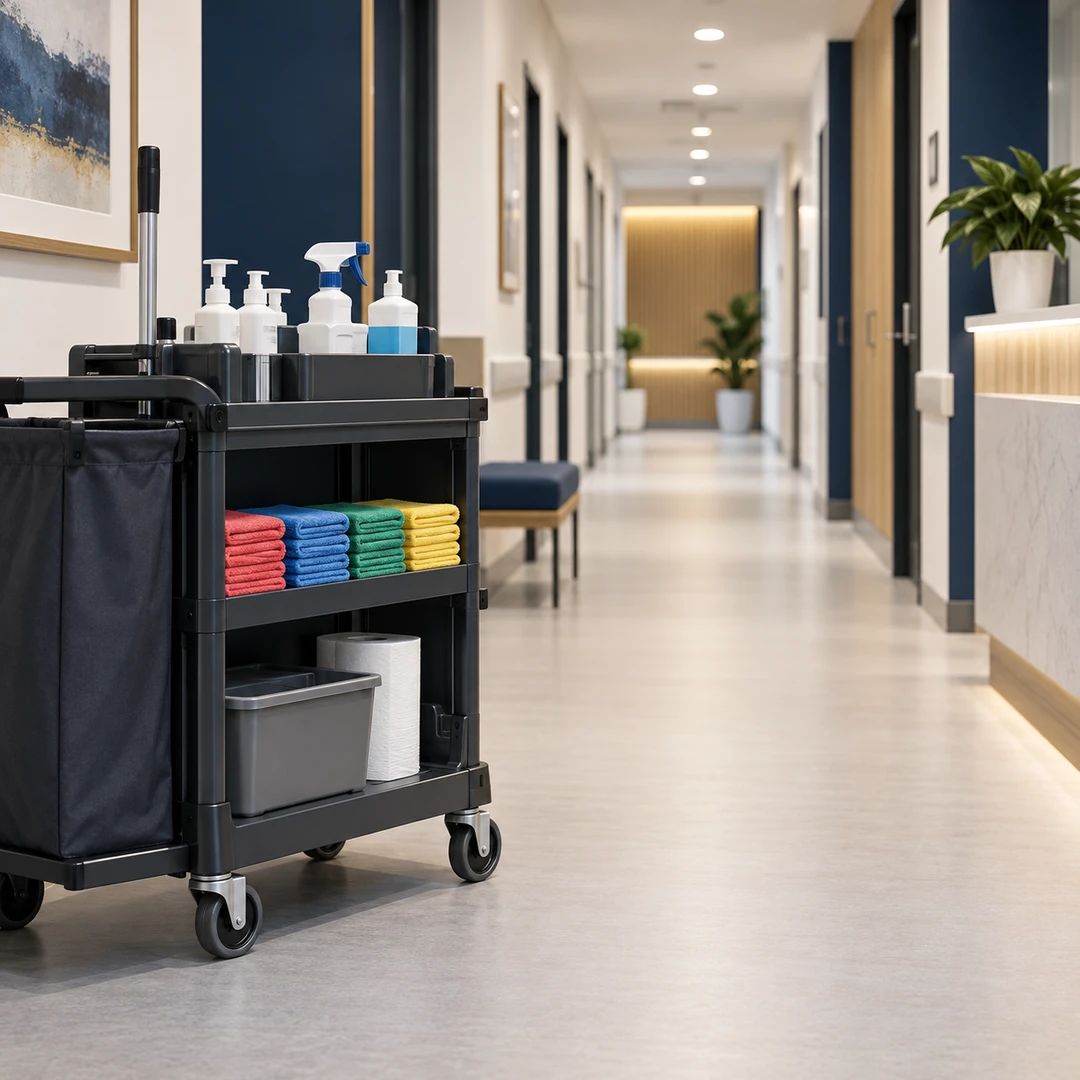
Cross-contamination is the first failure. A single mop bucket taken from the washroom into a treatment room undoes the point of cleaning that room at all. Colour coding exists because it makes the mistake visible: a red cloth in a yellow zone is wrong at a glance, even to someone who has never read the procedure.
Contact time is the second. Each product carries a stated wet period on its label, and that figure is not advisory. Spray and immediate wipe leaves a surface that looks clean and has been chemically pointless. Crews trained on offices are rewarded for speed, so this is the step that disappears first.
Records are the third. Practices are assessed on systems, not impressions. The NHMRC's Australian Guidelines for the Prevention and Control of Infection in Healthcare treat environmental cleaning as part of standard precautions in office-based practice, and the ACSQHC sets out the same expectation for day procedure services in its Preventing and Controlling Infections Standard. A cleaner who leaves no trail gives you nothing to show against either.
There is a fourth, quieter failure: awareness. Clinical rooms hold equipment that must not be wiped by a cleaner, bins that must not be touched, and specimens or samples that must not be moved. Crews who have never been briefed on this either avoid whole areas or, worse, tidy something they should have left alone.
What does cleaning a GP practice or medical centre involve?
General practice work is the busiest routine we run: consult rooms and a shared treatment room cleaned in sequence, a waiting room that carries the day's traffic, patient toilets restocked, and the whole site left ready for the first appointment.
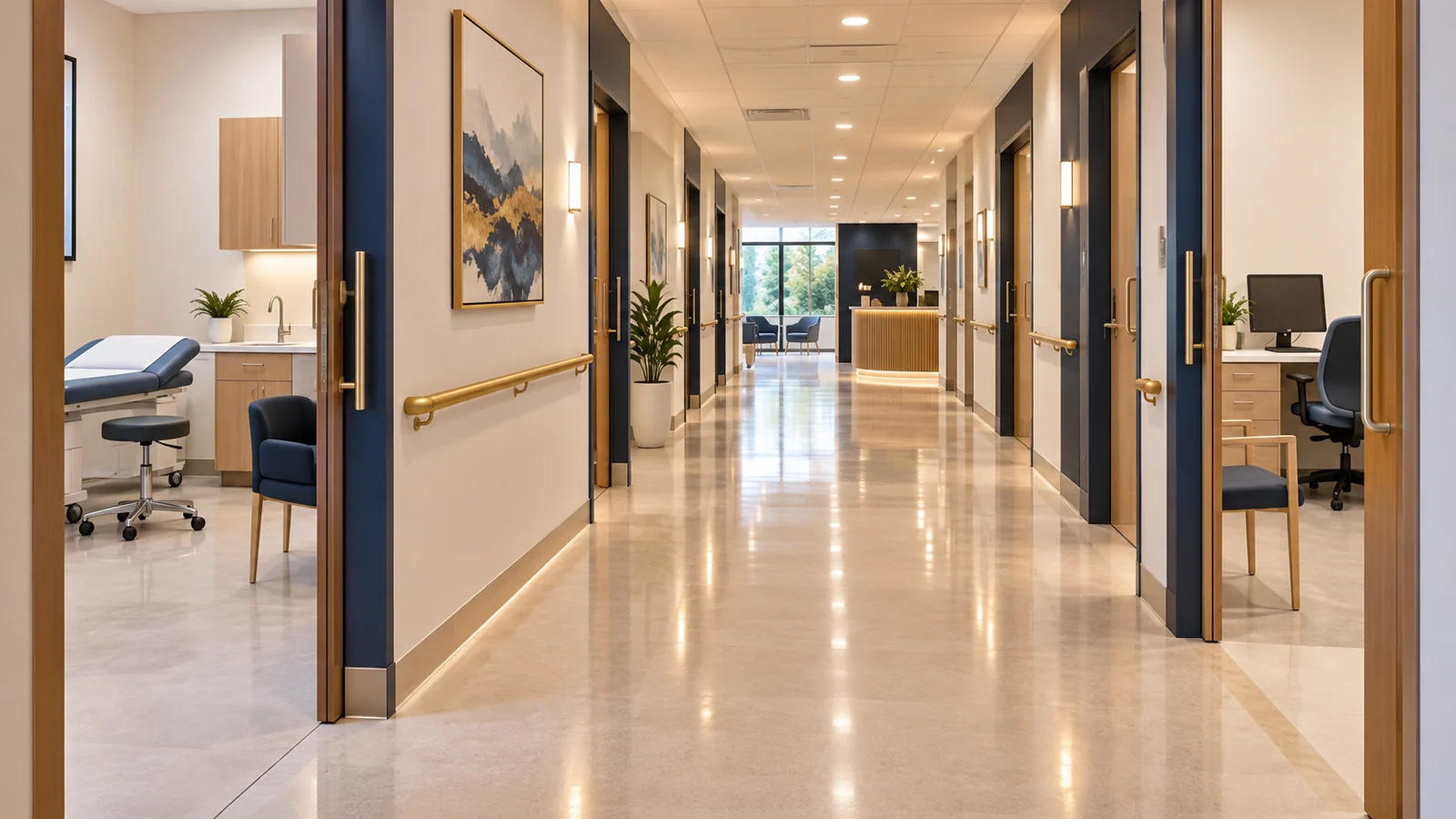
A centre with six doctors and two nurses turns over hundreds of patients a week, and nearly all of that lands on the same surfaces: door handles, chair arms, the counter edge at reception, the card terminal, the treatment couch and the taps beside it. Those points carry the routine rather than the floors, though floors are what most people look at.
The treatment room is where the sequence matters. Benches and the couch are cleared by your nurse, then cleaned with a listed disinfectant held for its label time. Sharps containers, the vaccine fridge and any instrument tray stay untouched, and anything we notice about them goes in the log instead.
Waiting rooms need a different eye. Fabric chairs, children's play corners, magazine racks and water stations all collect what a hard-surface routine misses, and they are the first thing a patient sees at eight in the morning.
Medical centre cleaningHow are consulting suites and medical offices cleaned?
Suites sit inside commercial buildings, so the work is shaped by the building as much as the medicine: contractor registration, lift and dock bookings, after-hours access, and a clear split between your suite and whatever the base-building cleaner covers.

Specialist rooms are quieter than a GP floor and fussier about presentation. Consulting desks, keyboards, phones, examination couches and stools carry the clinical load, while the waiting area, glass and joinery carry the impression the patient forms while they wait.
The building sets the rest. Some towers want contractor inductions and insurance certificates lodged before a crew is allowed in after six. Others limit the service lift. We handle that paperwork during onboarding so the first night is not spent arguing at a security desk.
Where several suites share a floor, we quote each tenancy separately with its own zone plan, even when one crew cleans them all. That keeps each practice's records its own, which matters when one of them is being assessed.
What changes in specialist and day clinics?
Procedure rooms and recovery bays raise the clinical share of the site, so more of the visit is spent on surfaces near the patient, the order of rooms is stricter, and turnaround between lists has to fit the clinic's own schedule.
Skin, eye, cosmetic and similar clinics run a room that is not quite a consult room and not a theatre. It has a procedure chair or table, a trolley, task lighting and often a sink used for hand hygiene between patients. Everything within arm's reach of that chair is treated as clinical and cleaned accordingly.
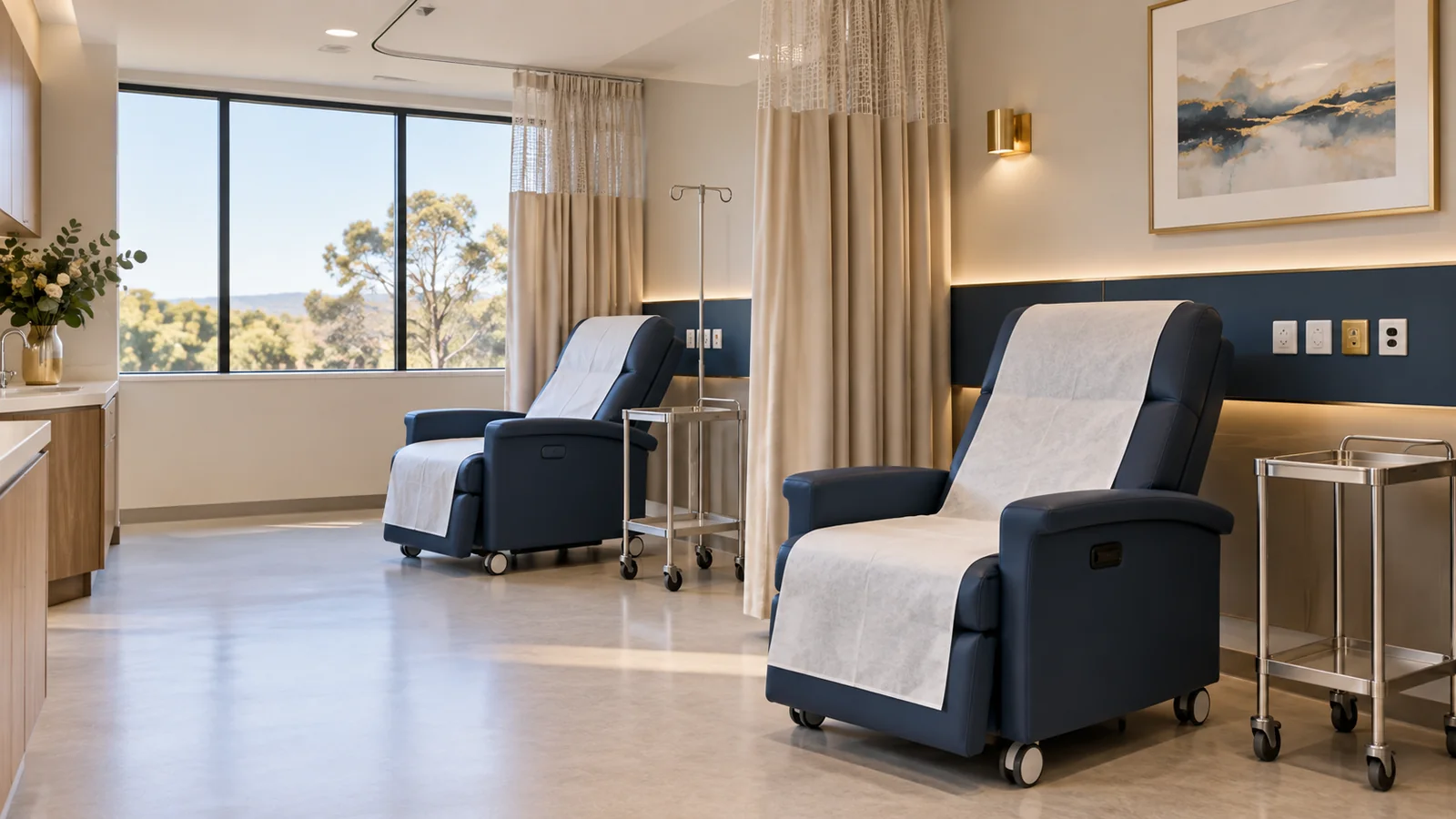
Recovery areas bring their own list: chair arms and footrests, side tables, call buttons, blanket storage and the floor around each bay, where spills land. Clinics that run a full list often want a mid-day reset as well as the after-hours clean, and that is quoted as a second, shorter visit.
Where a clinic holds a day hospital licence, the scope changes again and we split the site with the facility's own staff before quoting.
Specialist and day clinic cleaningHow do dental, allied health, pathology and vet rooms differ?
Each has a line we do not cross. In dental we clean around the chair, never the chair's clinical surfaces or the steriliser. In allied health the plinths and equipment carry the risk. In pathology the collection room follows the provider's protocol. In vet clinics the nurses keep the kennel and surgery areas.
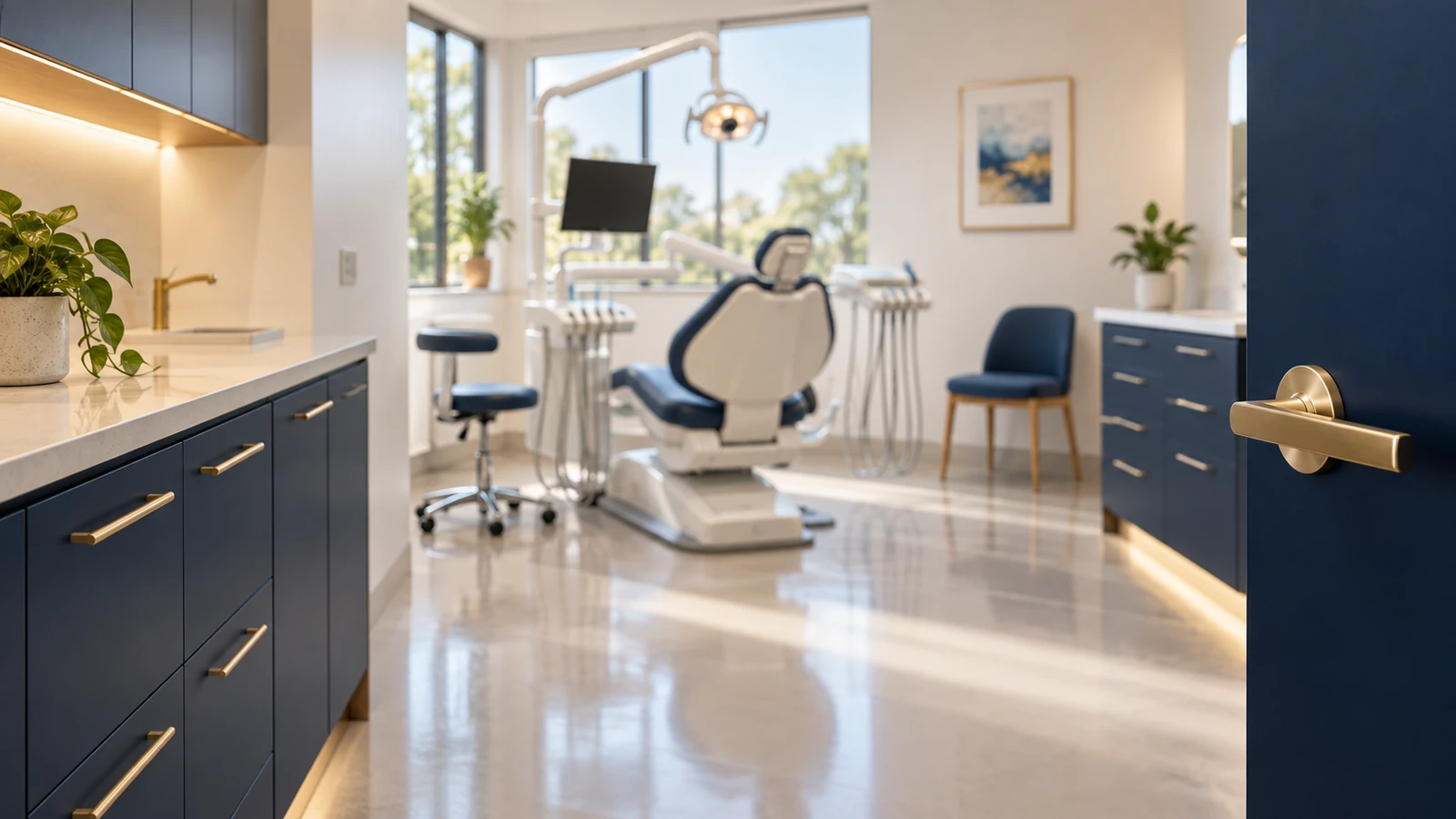
Dental. Surgery floors, skirting, cabinetry fronts, door furniture, reception and bathrooms are ours. Handpieces, the chair's clinical surfaces, suction lines and the steriliser belong to your dental assistants under the practice's own reprocessing procedure, and the sterilising room is cleaned only after they have cleared the bench. Read the detail on dental clinic cleaning.
Allied health and pathology. Physiotherapy plinths, exercise mats, weights, podiatry chairs and psychology soft seating are the pressure points, and they get wiped between the floor work rather than after it. Pathology collection rooms are agreed with the provider first, because the chair, the tray and the specimen bench each have their own rule. That sits on allied health and pathology cleaning.
Veterinary. Hair, odour and a waiting room shared by anxious animals need a routine of their own, with hard floors and bench seating done every visit. Consult tables' surrounds and scales are included; kennels, isolation and surgery stay with the clinical team unless your practice manager asks otherwise. See veterinary clinic cleaning.
Can we take on day surgeries and aged care facilities?
Both are taken on by arrangement, not by default. Day procedure centres and aged care or NDIS facilities carry requirements above ordinary practice work, so we scope the site, agree what stays with your own staff and confirm worker screening before we put a price on anything.
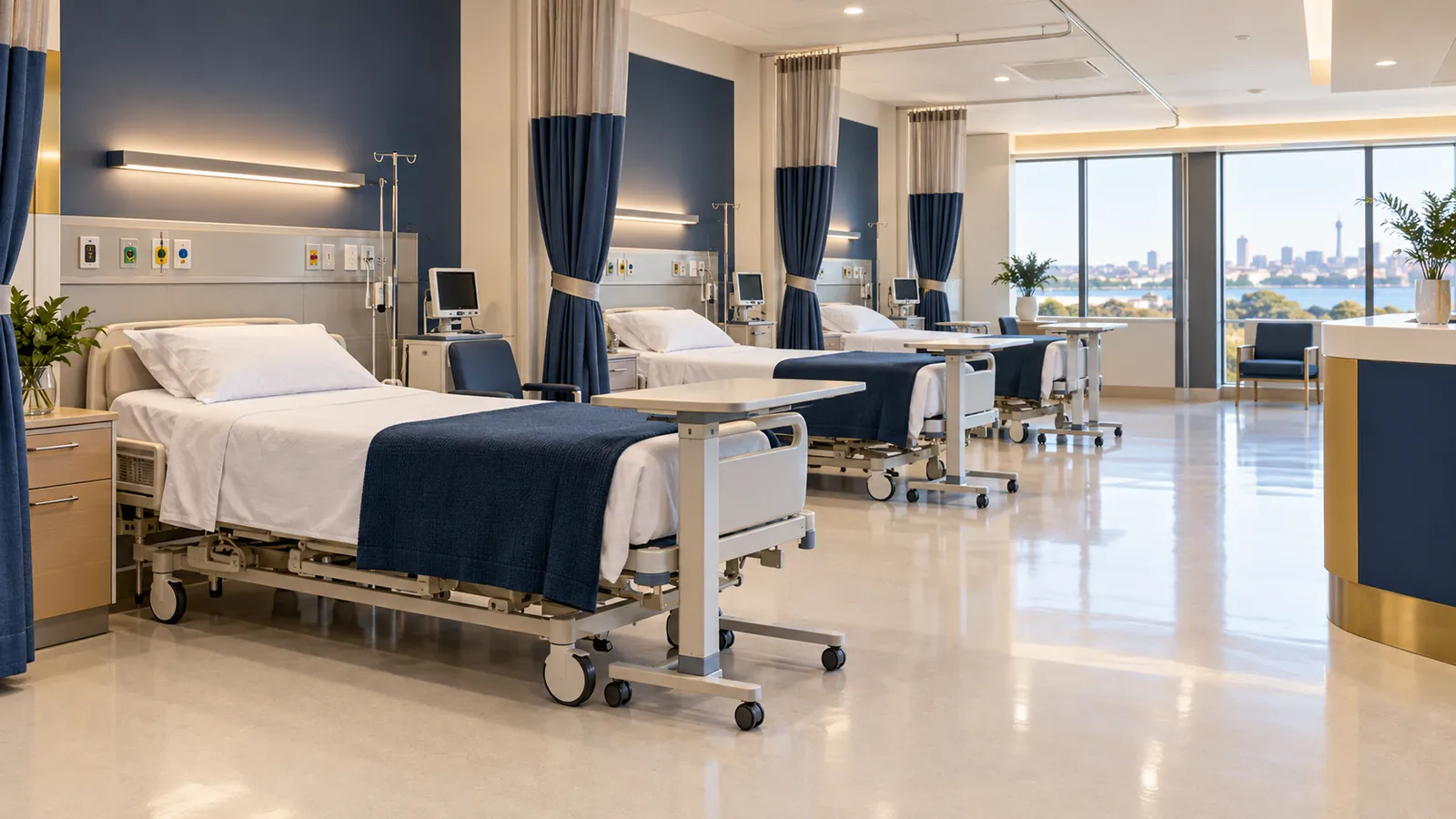
In a day procedure centre, theatres follow the facility's own perioperative protocol and the staff who run it. What can sit with us is the ring around that: bays and bed surrounds, the admission and discharge desks, corridors, change areas and staff amenities. The split is written down before the first shift, not negotiated later. The page on day surgery cleaning covers how we work with a nurse unit manager.
Aged care and NDIS sites are homes as much as facilities. Lounges, dining rooms, therapy rooms, handrails and shared bathrooms are cleaned around people who live there, which changes the hours, the noise and how crews behave in a corridor. Worker screening requirements are confirmed with the provider in writing before anyone attends. See aged care and NDIS facility cleaning.
If your site does not fit either description, say so early. We would rather decline at the enquiry than take on a facility whose rules we cannot meet properly.
When does a practice need an infection-control deep clean?
A deep clean is booked when the routine cannot answer the situation: after a known infectious case, a water leak or sewage backflow, a fit-out or building works, before an accreditation visit, or when a new tenant takes over rooms with no cleaning history.
The difference is reach and time, not drama. A nightly program touches the surfaces that matter every day and rotates through the rest. A deep clean takes the site in one pass: high surfaces, vents and diffuser faces, under and behind fixed furniture, chair bases, skirting, blinds, and the floors given a proper machine clean instead of a mop.
Fogging is not part of it, and no kill-rate figures are quoted. What we do is agree the scope with your practice nurse or principal, use listed products for the surfaces involved, hold the contact times, and hand over a record of what was done in which room.
Timing is usually the constraint. A deep clean of a six-room practice runs across a night or a weekend, sometimes both, and rooms come back into service as they are finished rather than all at once. Where building works are involved, we would rather wait until the trades are finished than clean a site twice for the same fee.
The full method, including what we ask you to clear beforehand, sits on the infection-control deep cleaning page.
How do after-hours cleaning programs work?
A program is the routine on a schedule: an agreed arrival time after your last session, a fixed order of zones, a rotation of weekly and monthly tasks, the same crew wherever possible, and a signed log left behind each visit.
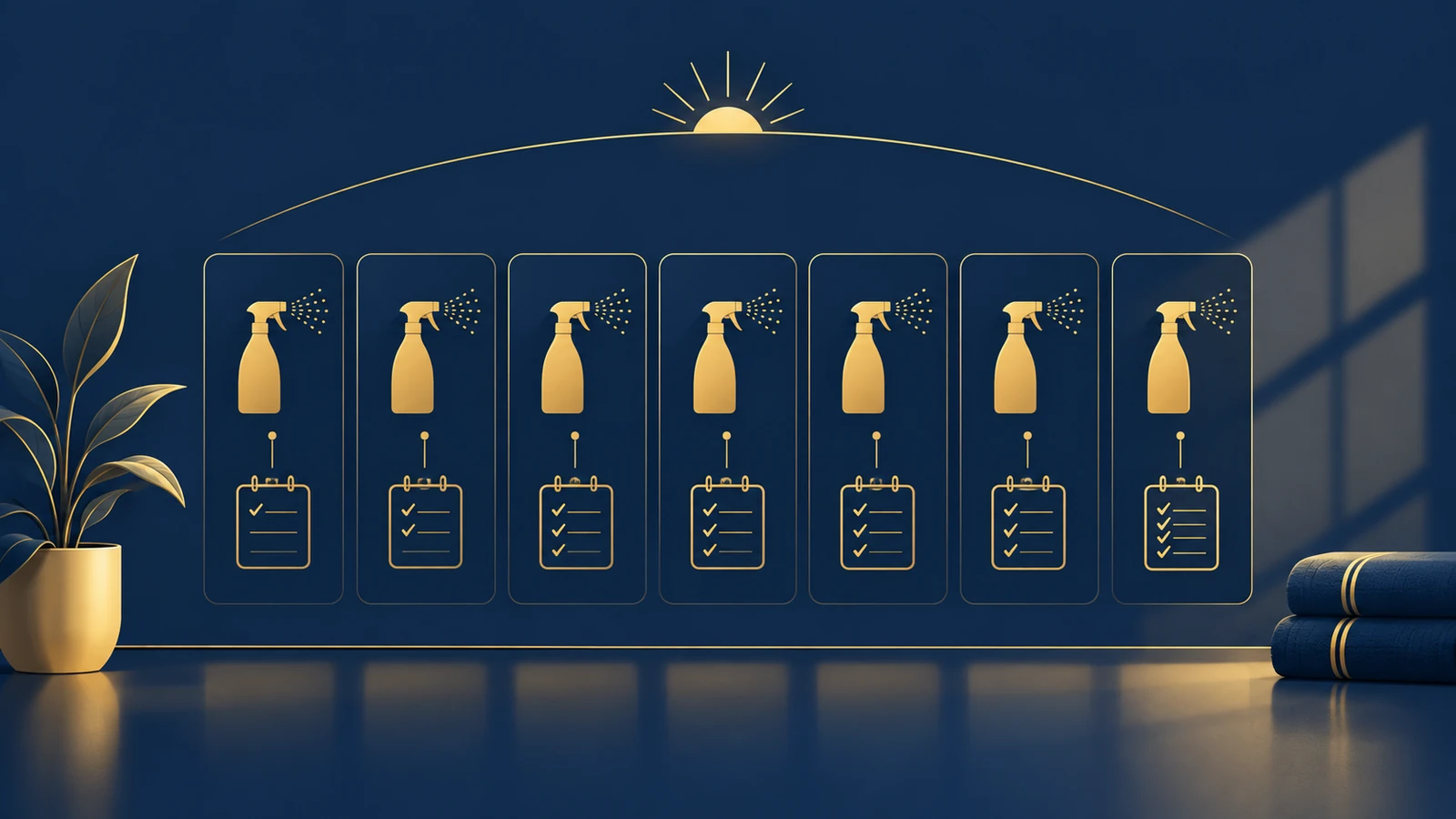
Programs exist because consistency is what practices actually buy. Anyone can clean a room once. Doing it the same way on a Tuesday in June as on a Friday in December, with a relief cleaner, is the hard part, and it only happens when the site has a written plan someone can follow.
Each program carries three documents: the zone plan, the task rotation and the product register. A new crew member reads those before their first shift, which is why a change of staff does not have to mean a change in standard.
Site keys and alarm codes are issued against a register, and crews are briefed on privacy, so screens, files and appointment books stay where your staff left them. Scheduling detail, including weekend and extended-hours options, sits on the page about after-hours medical cleaning programs.
How are medical cleaning services priced and quoted?
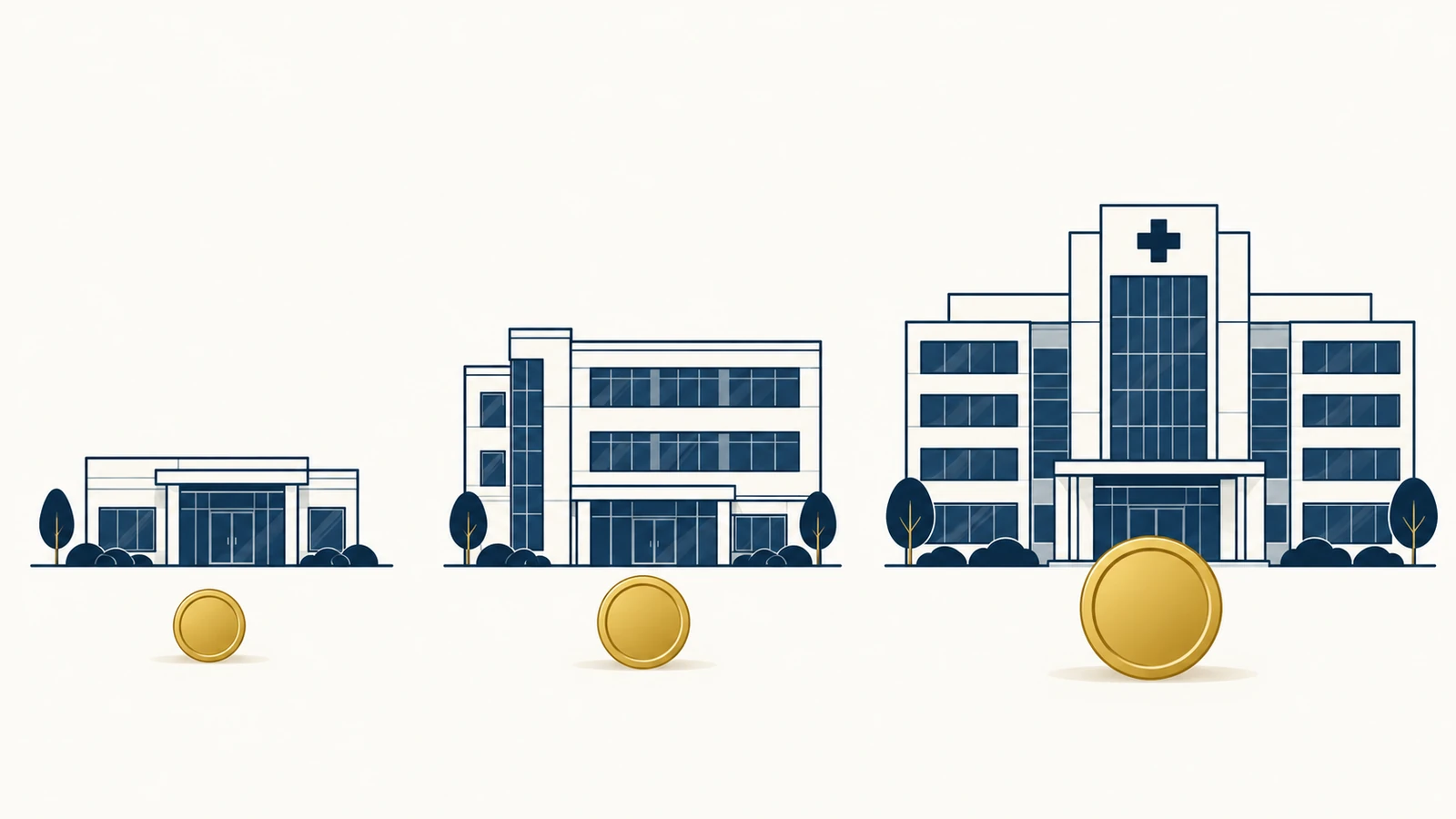
Pricing is per visit. The figure is built from how many rooms there are, how many of them are clinical, how often we attend, what the floors are and how hard the building is to get into. We walk the site, write the scope, then quote a fixed figure against it rather than an hourly rate.
An hourly rate tells you nothing about whether the treatment room gets its contact time. A fixed per-visit price attached to a written scope does, because the scope lists the rooms, the tasks, the rotation and the exclusions. If a cleaner will not put that in writing, the price is not comparable to anything.
Three things move a quote more than people expect. Clinical share is the first: two treatment rooms take longer than four consult rooms. Floors are the second, since carpet, vinyl and sealed timber each need different machines and periodic work. Access is the third, and a suite behind a security desk with a booked lift can cost more time than a clinic twice its size with a car park.
The breakdown by facility type sits on the medical cleaning cost page. To put a figure against your own rooms, get a quote and we will arrange a walk-through, usually before or after consulting hours so nothing interrupts your sessions.
What else do practices ask about these services?
Four questions come up on nearly every first call: what a daily clean has to cover, whether we work during sessions, which products we use, and whether we take home-care work. Anything specific to your rooms is better answered at the walk-through.
What should a daily medical clean include?
At minimum: every mapped touchpoint, clinical surfaces disinfected for the full wet period on the product label, waiting and reception areas, washrooms restocked, general waste and recycling removed, floors in all rooms, and a signed log left behind recording who attended and what was done.
Do you clean during consulting hours?
Rarely, and only where a site asks for it. Cleaning around patients means noise, wet floors and trolleys in corridors during appointments. Where a clinic needs a mid-day reset between lists, we quote it as a short second visit with a limited scope agreed in advance.
Are your products TGA-listed?
Clinical-area disinfectants carry an AUST L number, which means the product itself appears on the therapeutic goods register. General detergents are not therapeutic goods, so they are not listed. Every product we bring in appears on your site register with its safety data sheet.
Do you clean private homes for home care?
No. We work on commercial premises only, so home-care cleaning and domestic work fall outside what we do. Residential aged care and NDIS facilities are different, because they are managed sites, and those are quoted by arrangement after the provider confirms screening requirements.