Infection-Control Deep Cleaning
There is a lot of theatre in this part of the industry: fogging machines, percentages on flyers, photographs of people in hazmat suits. None of it is what a practice actually needs. Medical deep cleaning services worth paying for are methodical rather than dramatic: every surface reached in one pass, products held on the surface for as long as the label states, and a written account of each room. We book two kinds of attendance, scheduled and response. Both sit inside our medical cleaning services.
What are medical deep cleaning services, exactly?
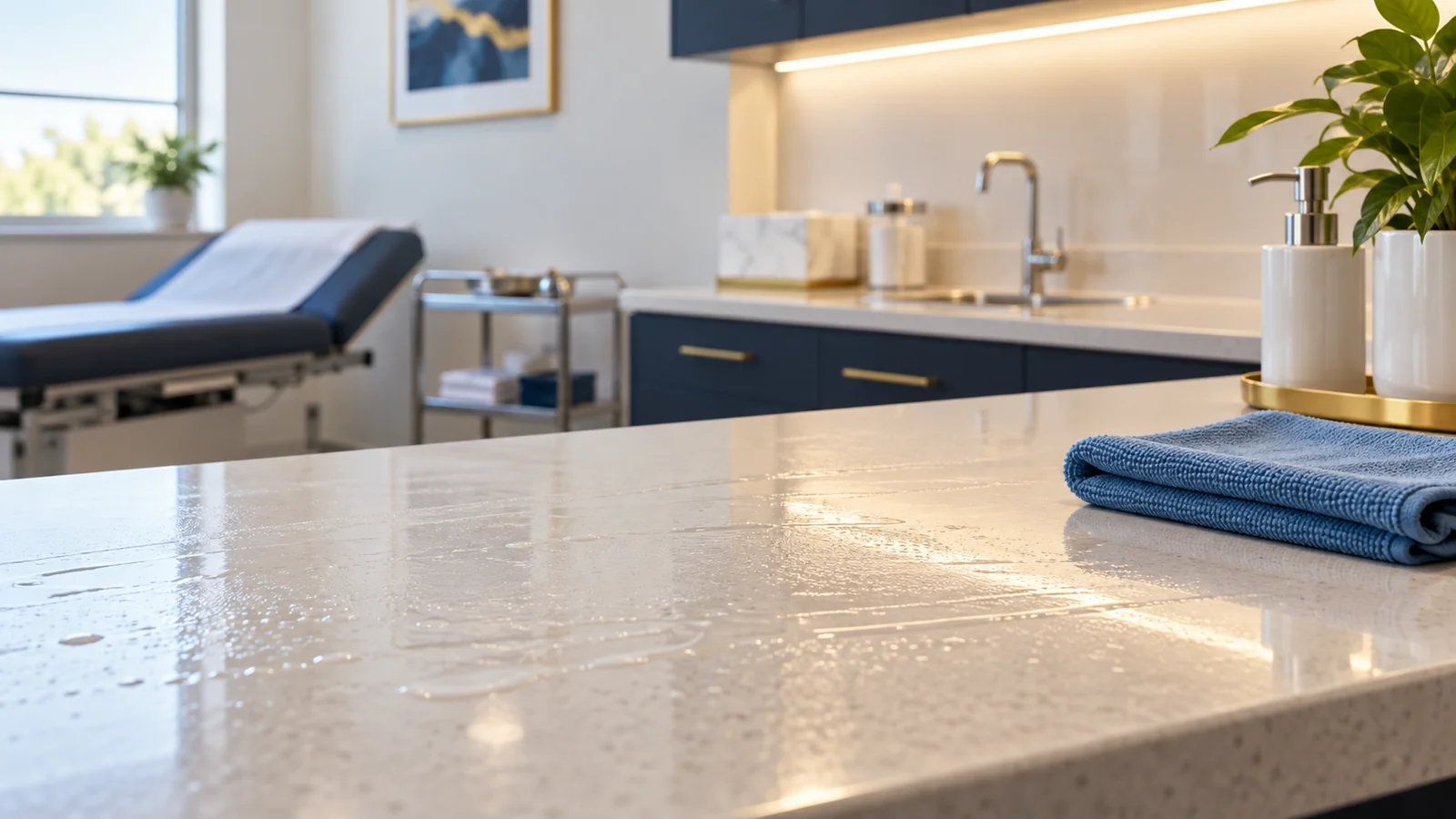
A single attendance that reaches everything a nightly routine covers only on rotation: high surfaces, vent faces, the backs and undersides of fixed furniture, skirting, chair bases, grout, tracks and floors given machine work, with clinical surfaces disinfected at label contact times.
A nightly clean is a maintenance activity. It keeps the surfaces people touch under control and rotates slowly through everything else. A deep clean is a catch-up activity. It takes the site in one pass and resets the baseline that the nightly routine then holds.
The work is unglamorous. Crews move furniture rather than clean around it, take vent faces down where they are removable, get behind the treatment couch instead of beside it, clean the top of the door frame nobody has looked at since the fit-out, and machine the floor rather than mopping it again.
Practices usually arrive at a deep clean for one of three reasons. The site has been cleaned to a low standard for years and needs resetting before a new routine can hold. Something happened, such as an illness cluster or a leak. Or an accreditation visit is coming and the practice wants the building to match the paperwork.
Each reason produces a different scope. A reset after years of neglect is mostly removal work: grease on kitchen joinery, grime along skirting, floor sealer that has worn through. A pre-accreditation clean leans towards storage, records areas and the rooms assessors actually walk into.
What good deep cleaning looks like
- Written scope, room by room, agreed before the visit
- Furniture moved, surfaces cleaned before disinfecting
- Products held at label contact time, measured not guessed
- Floors machined, edges and corners done by hand
- A record of what was done in each room, signed
What the theatre looks like
- A fogging machine and a percentage on a flyer
- No scope, no room list, no record afterwards
- Spray and wipe with no regard for contact time
- Claims about specific organisms with nothing behind them
- Photographs of hazmat suits in a suburban GP practice
What is in a scheduled clinical reset?
The parts of the building a nightly visit cannot reach properly: high dusting and vent faces, under and behind fixed furniture, skirting and chair bases, grout and floor edges, window tracks, upholstery on a cycle, and every clinical surface disinfected to label time.
- HighVent faces, light fittings, door frame tops, pelmets and the upper wall line.
- LowSkirting, chair and couch bases, castors, the floor under fixed joinery.
- BehindBehind couches, fridges, filing units and anything that moves safely.
- FloorsMachine scrub on vinyl, extraction on carpet, edges and corners by hand.
Most practices run this quarterly. Dental and high-turnover clinics often go monthly on selected rooms, because aerosol and volume put them ahead of the curve. Smaller consulting suites are fine twice a year.
Blinds and curtains sit in the same category. Vertical blinds in a consult room hold dust that falls whenever they are moved, and fabric curtains around a treatment bay need laundering on a schedule your practice sets. Both are listed in the reset scope so nobody assumes the other party is covering them.
Upholstery is the item most often left out of a quote and most often complained about afterwards. Waiting room chairs absorb everything a practice sees in a year, and a visual check will not tell you much. Extraction or steam on a cycle is the only thing that changes them.
Storage areas are the part practices forget to include. Stock rooms, the cleaner's cupboard, the space under the reception counter and the cupboard where the spare chairs live all collect dust that migrates back into clean rooms every time a door opens.
Grout lines and floor edges are the other neglected zone. A mop rides over grout rather than into it, so tiled areas in a practice slowly darken along the joins until somebody assumes the tile is that colour. Machine work with the right pad brings it back, and it is one of the few visible wins in a deep clean.
Air vents deserve naming separately. A supply vent above a treatment couch blows whatever is on its face straight down onto the patient area, and nobody in the practice ever looks at it. Faces are wiped, removable grilles are taken down and washed, and anything needing a mechanical contractor is reported rather than forced.
Timing matters more than people expect. A reset needs rooms out of service for a few hours, so most run on a Friday night into Saturday, or across a long weekend. We would rather book it properly than rush it into a nightly window and do half the job.
Rooms come back into service progressively rather than all at once, so a practice that must open on Saturday morning can still run a Friday night reset. Clinical rooms are done first and released first, and the last thing finished is usually the front of house, which nobody needs before eight.
Practices usually pair the reset with something else: a carpet extraction, a strip and seal on tired vinyl, or a pre-accreditation tidy of storage areas. Doing those together saves a second shutdown.
Between resets, the holding work is done by the nightly roster set out under after-hours medical cleaning programs, and both are usually quoted together.
How does a response clean after an illness cluster work?
You tell us which rooms and what happened, the scope is settled with your practice nurse, and a crew attends on the next available shift. The work is the same method run harder: clean first, disinfect at label time, work from least to most affected, and write it up.
Practices call us after a gastro cluster among staff, a waiting room full of respiratory illness through winter, or a single patient who turned out to have something the practice would rather not have spread.
What we do not do is promise an outcome. Nobody can tell you that cleaning eliminated a risk, and a contractor who says otherwise is selling comfort. What cleaning does is remove soil and reduce contamination on surfaces, which is exactly what the Australian Guidelines for the Prevention and Control of Infection in Healthcare expect environmental cleaning to contribute.
Cost during a response is settled up front too. There is no emergency loading buried in an invoice afterwards; the rate for an out-of-cycle attendance is in your contract from the day you sign it, so a practice under pressure is not negotiating price at seven in the evening.
Communication during a response matters as much as the cleaning. Your practice needs to know when the crew is arriving, which rooms will be out of use, and when they can be used again. That goes in an email on the day rather than being left for staff to work out in the morning.
Staff areas are often the real source in a gastro cluster. The kitchen bench, the fridge handle, the microwave keypad and the shared kettle see every staff member in the building, and they are cleaned last in a normal routine because they are the least clinical space on site.
Sequence is the part that gets missed under pressure. Working from the least affected area to the most keeps the crew from carrying contamination backwards through the building, and it means equipment used in the worst room never returns to the rest.
Cloths and mop heads used in an affected room are bagged at the end rather than laundered on site, and the log records which rooms were treated, with what, and for how long.
- You callTell us the rooms involved, what happened and when the practice next needs them.
- We scope itAgreed with your practice nurse: rooms, surfaces, products, and what your staff clear first.
- Crew attendsNext available shift, usually the same night or the following one, depending on the size of the job.
- Written upRoom by room record with products and times, for your incident file.
What do TGA listings and dwell times actually mean?
A listed disinfectant carries an AUST L number, meaning the product is entered on the Australian Register of Therapeutic Goods. Dwell time, also called contact time, is the period the label says the surface must stay wet. Miss it and the product has not done its job.
Two terms get used loosely in cleaning sales. The first is hospital grade, which is a defined category under the therapeutic goods rules rather than a compliment a supplier pays its own product. The second is listed, which means the product appears on the register and carries an AUST L number on the label.
The TGA explains how listed disinfectants are regulated in Australia, including which claims require listing. If a product makes specific claims about organisms, it has to be listed to be supplied here.
| Surface | Approach | Why |
|---|---|---|
| Clinical hard surfaces | Clean with detergent, then a listed disinfectant held for its label time | Soil blocks disinfectant; cleaning first is not optional |
| General hard surfaces | Neutral detergent, disinfectant only where the zone requires it | Disinfecting a reception desk daily achieves little and damages finishes |
| Vinyl and sealed floors | Machine scrub, then disinfect where the room is clinical | A mop moves soil; a machine removes it from the surface profile |
| Carpet and upholstery | Extraction or steam, with fabric-safe products | Disinfectant on fabric mostly wets it; removal is what works |
| Equipment surfaces | Left to your staff, or wiped only where the manufacturer allows | Devices have their own instructions and warranties |
Dilution is measured rather than poured by eye, using dosing equipment where the product supports it. A disinfectant mixed too weak does nothing useful, and one mixed too strong leaves residue, damages finishes over time and costs more per litre than it should.
The product register at your site lists what we use, where, at what dilution and with what contact time, with the safety data sheets attached. If your practice already specifies products, we use yours.
What is a deep clean not?
It is not sterilisation, it is not fumigation, and it is not a guarantee about infection. Cleaning removes soil and reduces contamination on surfaces. It does not make a room sterile, and no honest contractor will tell you otherwise.
- Not sterilisationSterilising is a validated process applied to instruments, done by your staff with equipment built for it.
- Not foggingWe do not fog. Surfaces need contact, and a mist that settles unevenly is not a substitute for a cloth.
- Not a guaranteeNo kill rates, no infection-rate promises. What you get is method, evidence and a written record.
There is one more thing it is not: a substitute for the nightly routine. Practices sometimes ask whether a monthly deep clean could replace daily visits, and the answer is no. Touchpoints recontaminate within hours of the first patient, and no periodic visit fixes that.
Nor is it a repair service. We report failing sealant, lifting vinyl, damaged grout and cracked couch upholstery, but fixing them is a trade job, and pretending otherwise leaves a practice with a surface that cannot be cleaned properly anyway.
This matters commercially as well as ethically. A practice that buys a fogging service after an outbreak often gets a certificate, an invoice and nothing that stands up when someone asks what was actually cleaned in room three.
We would rather hand over a room-by-room record with the products and times on it. It is less impressive at the point of sale and considerably more useful six months later.
What documentation comes with a deep clean?
A scope sheet agreed beforehand, then a completion record listing each room, the tasks performed, the products used with their contact times, the crew, and anything found that needs your attention, such as damaged flooring or failing sealant.
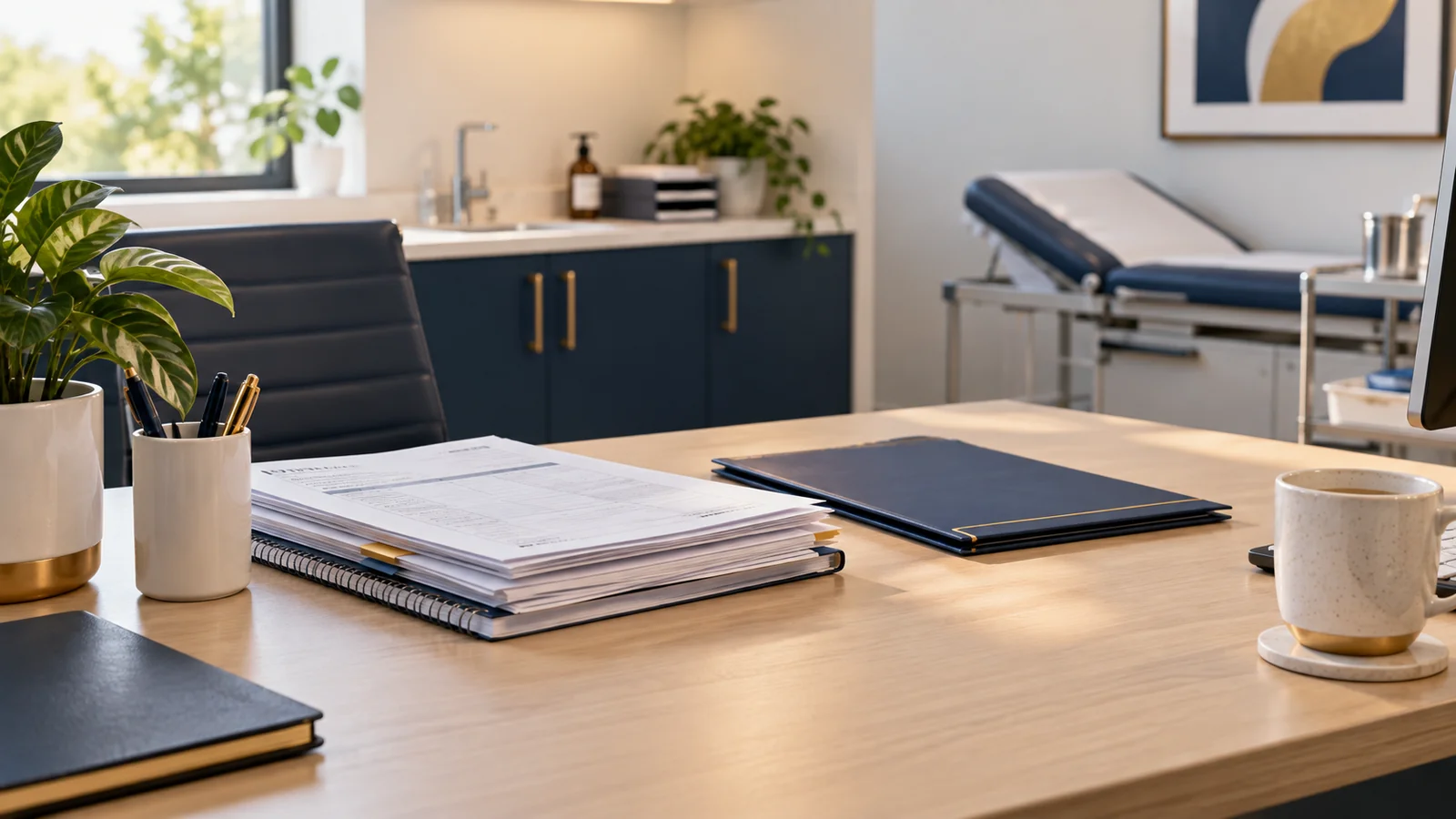
The scope sheet is signed before the visit so there is no argument afterwards about whether the storeroom was included. It lists rooms, tasks and exclusions, and it is the document your accreditation file wants alongside the completion record.
Practices that hold accreditation usually file the scope sheet and completion record together in the cleaning section of their evidence folder, alongside the nightly logs. Assessors rarely ask for a deep clean record specifically, but it answers the follow-up question about how the building is maintained beyond the daily routine.
Photographs are included where they help: before and after on a specific problem area, or a record of damage found. We do not photograph patient areas in a way that identifies anything, and nothing is published anywhere.
Timing of the record matters too. It is written on the night rather than reconstructed later, which is why the room list and the product details are on the scope sheet before the crew starts.
Findings matter more than most practices expect. A deep clean is the one time a year somebody looks behind the fridge, under the couch and at the top of the vents, and that is where you learn that a seal has failed or a floor edge is lifting.
How this sits beside the nightly logs and the monthly summary is covered on the page we wrote for practice managers.
How do you book a clinical deep clean?
Tell us the rooms, the reason and the window you can give us. Scheduled resets are quoted from a walk-through or from your existing zone plan. Response cleans are scoped by phone or email the same day and attended on the next available shift.
Existing clients usually book a reset as part of the annual plan, so it lands on a known weekend and the practice can schedule around it. New clients are quoted after a walk-through, because the work depends on what the last few years have left behind.
We quote a reset off the room list and the condition, not off floor area alone. Two practices of the same size can be six hours apart if one has carpet in every consult room and the other has sealed vinyl throughout.
Pricing is by scope and hours rather than square metres, and the quote separates the reset from any floor restoration so you can decide on each. The logic behind our figures sits under medical cleaning cost.
If the reason is an illness cluster, say so at the start. The scope changes, the sequence changes, and planning it properly beats discovering halfway through that three rooms were involved rather than one.
To book, get a quote with the room list and your preferred window, or read how the nightly method works across medical cleaning in Melbourne.
What do practices ask about deep cleaning?
Three questions dominate: what the product listing means, how fast we can attend after an outbreak, and how often a reset is actually needed. Short answers here, longer ones when we scope your site.
What does TGA-listed actually mean?
It means the disinfectant has been entered on the therapeutic goods register, which is why an AUST L number appears on the label. Products making specific claims about organisms must be listed before they can be supplied in Australia. Listing is about the product, not about how well it is used.
Can you come after a gastro outbreak?
We can. Let us know the rooms affected and the time you need them back in use. Your nurse and our supervisor agree what is covered that day, a crew is rostered to the next shift we can staff, and the areas worst affected are left until last so nothing travels backwards.
How often should a practice book a reset?
Quarterly suits most general practices. Dental and high-volume clinics often want selected rooms monthly because of aerosol load, and small consulting suites manage on twice a year. The nightly program does the holding work between resets, which is what keeps the interval sensible.
Need a reset, or something dealt with tonight?
Send the room list and the reason. You will get a scope back, not a sales pitch about machines.