Medical Centre and GP Practice Cleaning
A general practice packs the hardest room mix in primary care into one floor: rooms that turn over every fifteen minutes, a treatment room that has to be strict about order, a front of house carrying the foot traffic of a small railway station, and toilets judged by every patient who uses them. Medical centre cleaning has to handle all four with one method and leave proof it happened. This page explains how we do that, room by room. It sits under our wider medical cleaning services.
What does medical centre cleaning cover, room by room?
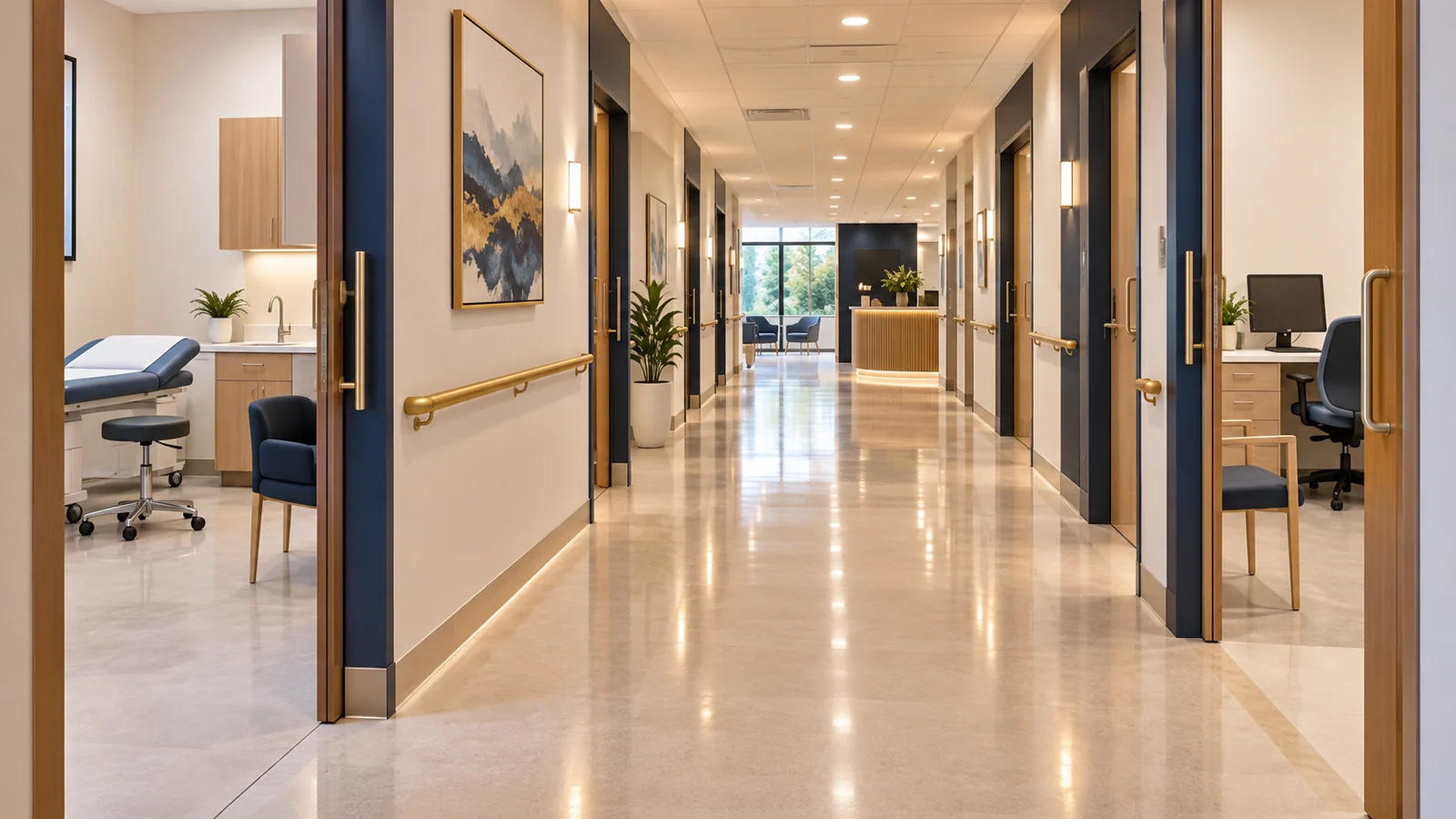
It covers every room the practice runs, sorted by risk rather than floor area: the consulting rooms, the treatment and nurse areas, front of house, patient and staff toilets, the staff kitchen, and the corridors and storage between them. Each one gets its own colour, its own products and a fixed place in the order.
The mistake we see in practices that have come from a general cleaner is not laziness. It is treating the building as one space. Somebody starts at the front door and works backwards with a single trolley, so the cloth that wiped a toilet flush button ends up on a consult desk two rooms later. Nothing looks wrong afterwards, which is exactly the problem.
We start with a plan of your floor. Every room is marked clinical or non-clinical, given a colour, and given a position in the cleaning order that runs from the areas with the least soil to the areas with the most. That plan goes in the site folder, so the crew that cleans your practice in March is following the same sequence as the crew who set it up in January.
| Room | Zone | Main tasks each visit | Products |
|---|---|---|---|
| Reception and waiting | Blue, non-clinical | Counter, card terminal, screens, chair arms, toys, magazine racks, glass, floors | Neutral detergent, glass cleaner |
| Consult rooms | Blue, clinical-adjacent | Desk, keyboard, phone, chair arms, examination couch, stool, basin, door furniture | Detergent, then listed disinfectant on patient surfaces |
| Treatment room | Yellow, clinical | Couch, trolley tops, bench, sink surround, splash zone, waste, floor | Listed disinfectant, full contact time |
| Nurse and dressing bay | Yellow, clinical | Bench, chair, shelving fronts, fridge exterior, floor | Listed disinfectant, full contact time |
| Patient washrooms | Red | Pan, seat, basin, taps, dispensers, mirror, floor, restock | Washroom disinfectant and descaler |
| Staff room and kitchen | Green | Benches, sink, fridge handle, microwave, table, floor | Kitchen detergent, food-safe sanitiser |
Consult rooms sit in a middle category. They are not treatment rooms, but the couch, the basin and the surfaces a patient touches are cleaned to the clinical standard while the desk and shelves are cleaned to the general one. Splitting the room like that is what keeps the time sensible without dropping the standard where it counts.
What happens in consult and treatment rooms?
The crew works high to low and clean to dirty: couch and headrest, trolley tops, bench and sink surround, then door furniture and floor. Surfaces a patient contacts get a listed disinfectant left wet for its label time. Instruments, sharps and anything inside a fridge or steriliser are never touched.
Your practice nurse clears the treatment room before we arrive. Trays go away, sharps containers are left where they are, dressing stock is put back in the drawer. What we take on is the fabric of the room: the vinyl couch and its headrest, the paper roll holder, the trolley tops once they are empty, the bench either side of the sink, the tap handles, the light switch, the bin lid, the door and the floor.
The splash zone around a treatment sink gets more attention than most cleaners give it. It collects what gets rinsed there, it is at working height, and it dries invisible. We wipe out to about a metre either side of the bowl, which is wider than the visible mark and closer to the real spread.
Consult rooms are quicker but easy to under-clean. The keyboard, the mouse, the phone handset, the pen on the desk, the chair arms on the patient side and the examination couch carry almost all of the day's contact. Those are on the fixed list for every visit, not the sweep-if-time list.
Where a room has been used for a patient with a known infection, your team flags it in the handover book and that room is cleaned last, with fresh cloths bagged afterwards and the log annotated. If the flag arrives after hours, we still get it, because the book sits with the site folder rather than in someone's inbox.
- Instruments and traysReprocessing and sterilising belong to your clinical staff, under practice policy.
- Sharps containersNever moved, never emptied. A full or damaged one goes in the log instead.
- Inside the vaccine fridgeThe door and handle are wiped. The fridge is not opened and the log is not touched.
- Clinical waste binsSealed bins stay put for your licensed contractor. We take general waste and recycling only.
Practices with a heavy procedure list sometimes want more than the nightly routine can reach. That is what an infection-control deep cleaning visit is for, and it is usually booked quarterly or after an event rather than as part of the standard program.
How do we handle waiting rooms and reception?
The waiting room is cleaned first, while cloths are fresh, and it is treated as a touch problem rather than a floor problem: chair arms, the counter lip, the card terminal, door handles, toys, water stations and the pens patients borrow and return.
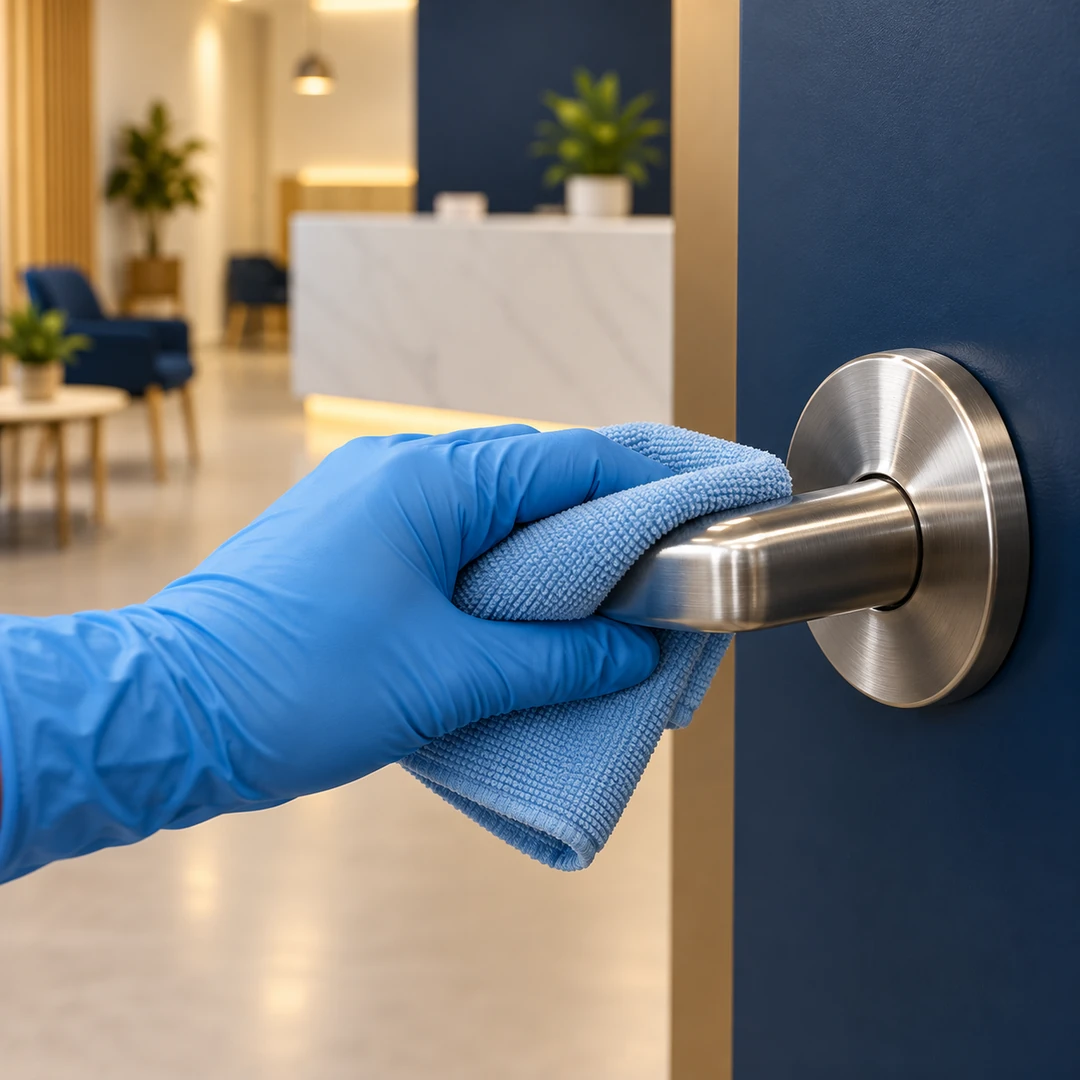
A busy bulk-billing centre can see several hundred people a week through one waiting room. Almost none of them touch the floor. They touch the chair they sit in, the arm they push off, the counter they lean on, the terminal they tap, the door they open on the way to a consult room and the toy they hand back to a toddler.
So the routine is written around those points. Chair arms and backs are wiped, not just the seat. The counter is done along its full lip, including the underside edge where hands grip. Card terminals and pens are wiped, and screens are cleaned with a product that will not haze them. Where a practice has a play corner, the hard toys are wiped and the soft ones are flagged for your team, because fabric toys need laundering rather than a cloth.
Floors still matter, particularly in winter when the carpet at the entry takes the weather. Entry matting gets vacuumed properly rather than passed over, and hard floors are mopped last in the zone so the room is dry before we move on.
Reception has one more consideration: privacy. Screens, notes and appointment lists are never moved, read or tidied. A crew that has been briefed on that will wipe around a printed list rather than lifting it, and that habit is worth more to a practice manager than any marketing line.
What about washrooms and staff areas?
Washrooms are cleaned last with the red kit and nothing from that kit goes anywhere else. Staff kitchens use the green kit and get food-safe products. Both are restocked on the same visit, because an empty soap dispenser undoes the hand hygiene the rest of the clean supports.
Patient washrooms are where a practice gets judged hardest and complained about most. The work is ordinary: pan and seat inside and out, the base and the pipework behind, basin and taps, dispensers wiped and refilled, mirror, door handle and lock, then the floor including the corners behind the door. What makes it hold up is doing the same list every single visit rather than on the days it looks like it needs it. Descaling is the part most crews skip: taps and pan rims build up, and once that surface is rough it holds soil however often it is wiped, so a descaler goes through on rotation.
Staff rooms sit at the other end of the risk scale and get their own kit for a different reason: food. Benches, the sink, the fridge handle, the microwave inside and out, the kettle base and the table are done with kitchen products, and nothing from the clinical or washroom kits is used there.
Accessible toilets need a little more thought again. Grab rails, the backrest, the flush lever and the emergency cord handle are all contact points, and the cord itself must hang free to the floor rather than be looped up out of the way, which is an easy thing for a cleaner to get wrong while mopping.
Consumables are checked every visit and recorded: hand soap, sanitiser, paper towel, toilet paper, bin liners. Practices can supply their own or have us bring them at cost. Either way, running out is a reportable event in the log, not a surprise on Monday morning.
Which records support RACGP accreditation?
Practices are assessed on systems they can evidence. You get a countersigned log for each attendance, your marked-up zone plan, the chemical register and its data sheets, notes on anything found, and a month-end roll-up. Those support your evidence. No cleaner can promise an accreditation outcome, and we do not.
General practices are assessed against the RACGP Standards for general practices, and the cleaning question usually arrives in the same shape: show me how this is scheduled, show me it happened, show me what you did when it did not. A roster answers the first part and nothing else.
What we hand over is designed for that conversation. The zone plan shows what is scheduled and where. The visit logs show it happened and who signed. Incident notes show the exceptions, including the ones that reflect badly on us, because a record with no misses in it is not a record anyone believes.
The page written for practice managers goes through the full pack, including how a missed task is handled and what turns up in the monthly summary. If you want to audit your own site first, our medical centre cleaning checklist is the same list our crews work from.
- What a surveyor asksHow is cleaning scheduled, and who does it?
- What we hand youThe zone plan and task rotation, signed and dated by visit.
- What we do not claimThat any of it guarantees a result. It is evidence, not a pass.
How does session-aware scheduling work?
We build the visit around your consulting hours rather than a fixed clock. The crew starts once the last patient has left, follows the room order, and finishes before your earliest staff member arrives. Extended-hours and Saturday practices get a schedule shaped to those sessions.
Most practices we clean close somewhere between five and eight, and the crew arrives about twenty minutes after the stated finish, because the last consult rarely ends on time. That gap is agreed, not guessed: if your Thursday runs late every week, Thursday gets its own start time.
The order of rooms follows the plan rather than convenience. Front of house first while cloths are fresh, then consult rooms, then the clinical rooms with their own kit and time on contact, then corridors, then washrooms, then the staff room. Restocking, the log and lock-up close it out.
- Arrive and read the handoverAlarm off, site folder open, any flagged rooms noted before the first cloth comes out.
- Front of houseWaiting, reception, entry matting and the public corridor.
- Consult roomsDesks, keyboards, couches, basins and door furniture, room by room.
- Treatment and nurse areasYellow kit, contact times held, splash zones and trolley tops.
- WashroomsRed kit, full list, restock, floors last.
- Staff room and close-outGreen kit, then the log signed, consumables noted, alarm set.
Practices running seven days, or two sites under one manager, usually move to a fixed roster with the same crew on the same nights. How those rosters are structured, including relief cover and weekend work, is covered under after-hours medical cleaning programs.
What drives the price for a GP practice?
Four things move the number: how many consult and treatment rooms there are, how many washrooms serve them, what the floors are, and how many nights a week we attend. Patient volume matters too, because a bulk-billing centre soils a waiting room faster than a five-doctor practice.
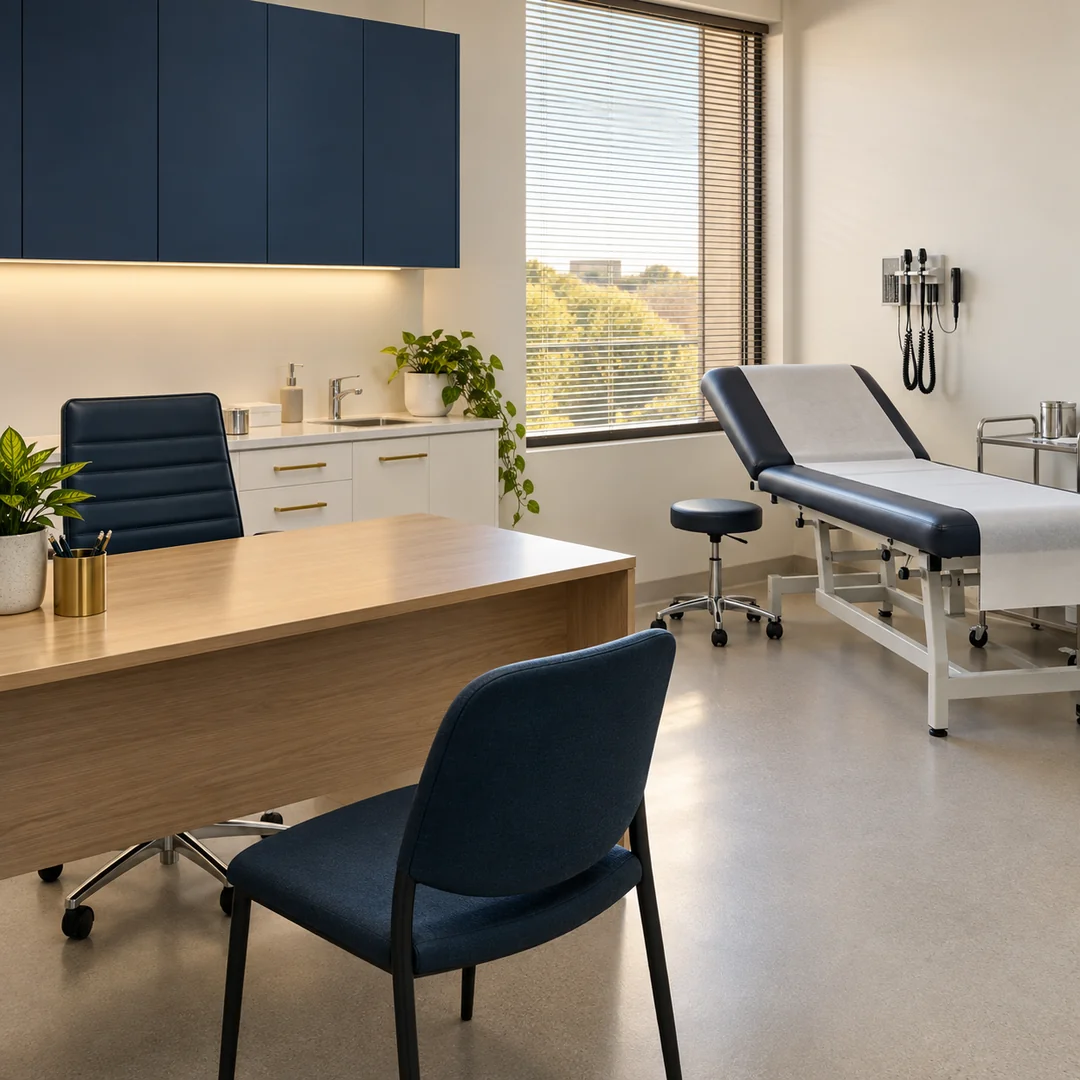
Room count is the starting point, but the mix decides the time. A pair of treatment rooms will outlast half a dozen consult rooms on the clock, because contact times cannot be rushed and the sequence is stricter. A practice with one treatment room, six consult rooms and two patient toilets is a very different job from one with three treatment rooms and a procedure bay, even though both might describe themselves as a six-room centre.
Floors are the next lever. Carpet in consult rooms needs vacuuming every visit and extraction on rotation. Vinyl needs machine work to stay presentable, and older vinyl with worn sealer needs stripping and resealing before any daily routine can make it look right.
Frequency cuts both ways. Five nights a week costs more in total and less per visit, because set-up and travel are spread, and the site never gets far enough behind to need catching up. Practices that drop to two nights often find the third visit each week was the one keeping the waiting room presentable.
There is no rate card here for a reason: two practices with identical room counts can sit an hour apart once the floors and the clinical mix are counted. The workings behind the per-visit figure, facility by facility, are set out on our page about medical cleaning cost.
How do you quote a practice like ours?
We walk the practice with you or your nurse, usually before sessions start or after they finish, and mark up the zone plan on the spot. The written price follows inside a day, fixed per visit, with the inclusions and the exclusions both listed.
The walk-through takes about half an hour. We count rooms, check floor types, look at the treatment room set-up, find the bin store and the cleaner's cupboard, and ask which tasks your staff want to keep. Practices often keep more than they expect: many nurses prefer to wipe their own trolley tops, and that is written into the scope rather than argued about later.
You get the scope before the price matters. If something in it is wrong, say so and we redraw it. Nothing starts until the scope reads the way your practice actually runs.
If you are still comparing options, the wider picture of how we work across Melbourne practices sits on our page about medical cleaning in Melbourne, and the service list covers everything else we run.
To start, get a quote and tell us the room count, the session times and how access works after hours. That is enough to book the walk-through and, for a straightforward practice, enough to price from.
What do practice managers ask about this service?
Three questions come up first: whether we clean treatment rooms, whether the paperwork is any use in an accreditation file, and whether we work between sessions or after hours. Short answers below, longer ones at the walk-through.
Do you clean treatment rooms?
Yes, once your nurse has cleared the room. We clean couches, trolley tops, benches, sink surrounds, splash zones, door furniture and floors using a listed disinfectant held for its full contact time. Instruments, trays, sharps containers and the inside of fridges or sterilisers stay with your clinical team.
Can your records go in our accreditation file?
Yes, that is what they are built for. Each attendance is logged and countersigned, the chemical register and data sheets live in the site folder, and a month-end roll-up lists anything missed. It supports the evidence a surveyor asks for, though no cleaning contractor can guarantee an accreditation result.
Do you clean between sessions or after hours?
After hours by default, starting once your last patient has left. Some practices also want a short mid-day reset of the waiting room and washrooms between morning and afternoon sessions, which is quoted separately as a second visit with a limited task list agreed in advance.
Want this running at your practice?
Send the room count and your session times. We will book a walk-through and put a fixed price against the plan.