After-hours by default
How each visit runs, cleanest to dirtiest
- BlueReception, waiting, consult desks
- YellowTreatment and procedure rooms
- RedToilets and basins, last
- GreenStaff kitchen, own kit
Medical Cleaning in Melbourne, planned zone by zone
Medical Cleaning Melbourne looks after GP practices, consulting suites, specialist clinics and allied health rooms once the last patient has gone. If you want medical cleaning in Melbourne that follows infection-control method instead of an office checklist, and leaves a written record your surveyor can read, you are in the right place.
Start with our medical cleaning services, or get a price for your rooms below.
- HoursCrews start after your last session
- ProductsTGA-listed disinfectants, used to the label
- RecordsA signed log after every visit
- ScopeNo sterilising, sharps or clinical waste
An office clean asks whether a room looks clean. A medical clean asks what touched what, in which order, and who wrote it down.
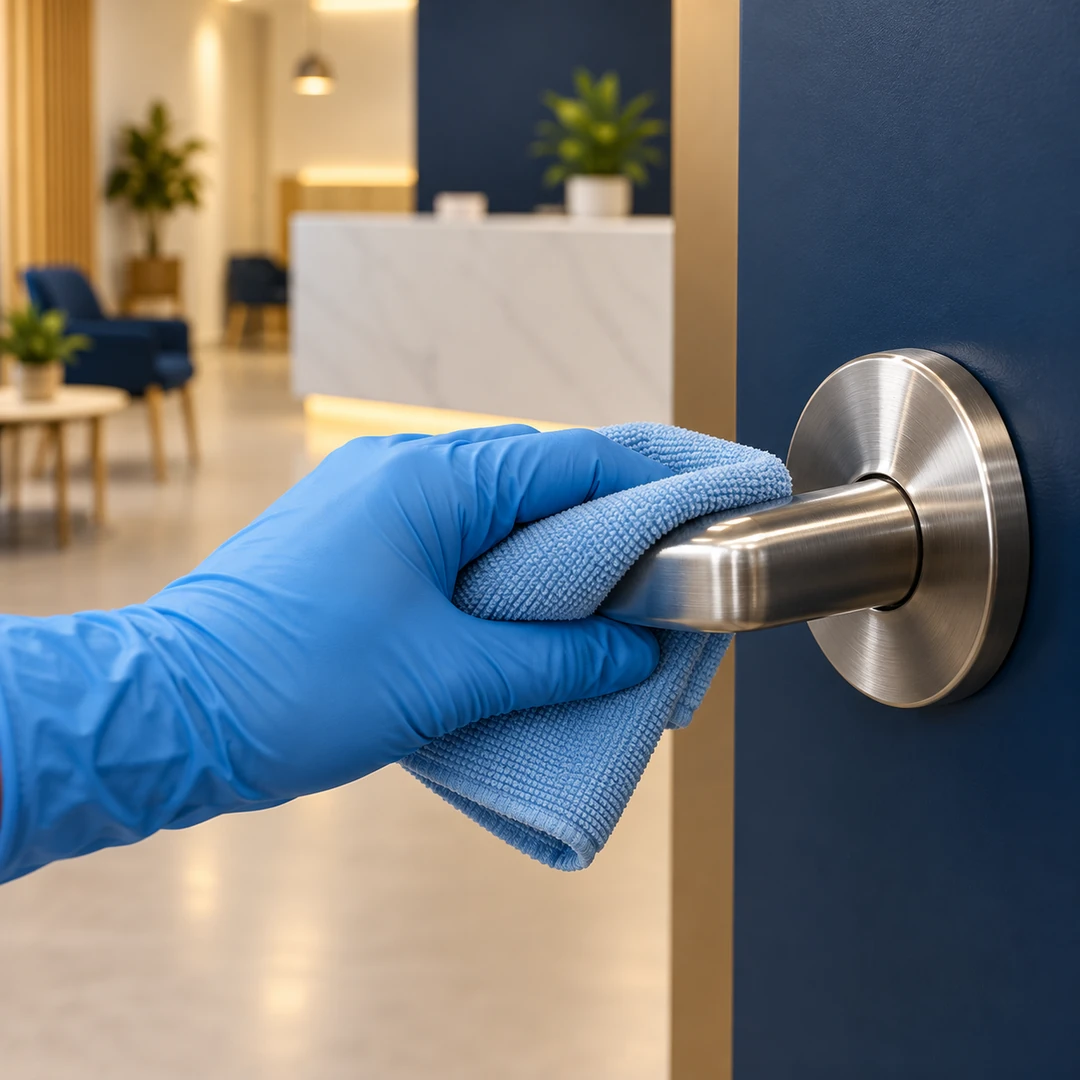
Touchpoint: door handle
Most practices find us after a cleaner who was good at offices turned out to be less good at treatment rooms. The mop that did the toilets found its way into the procedure room. The bench wipe ignored the contact time printed on the bottle. Nobody wrote anything down, so when the surveyor asked how rooms were cleaned, the practice manager had a roster and not much else.
We start from the other end. Before the first visit we walk your practice and mark every room on a zone plan. Each zone gets its own colour-coded cloths and mop heads, and the crew cleans in a fixed order from reception through to the toilets. Disinfectants are TGA-listed products left on the surface for the full contact time on the label, not sprayed and wiped straight off.
Every visit ends with a signed log. It notes what was cleaned, what was restocked, which products went where, and anything your staff should know before the first patient arrives, such as a dripping tap or a sharps container that is nearly full.
We work right across metropolitan Melbourne, from specialist suites on Collins Street to the busy bulk-billing clinics of the northern corridor, and we quote a fixed price per visit in writing. The jobs we turn down are listed just as clearly further down this page. Clinical managers need to see the edges of a contract before they sign it, and we would rather you knew them now.
How is medical cleaning in Melbourne different from an office clean?
Medical cleaning is routine cleaning built on infection-control method. It separates clinical and non-clinical zones, uses colour-coded equipment, applies disinfectants for their labelled contact time and follows a set touchpoint order. An office clean aims for tidy rooms. A medical clean aims for controlled, recorded ones.
For medical cleaning in Melbourne the difference shows up at 8am. A GP walks into a treatment room and expects the couch, trolley top, sink surround and door handle to have been done with a cloth that has never been near a toilet, using a product that actually had time to work. An office crew can make that room look fine and still miss every one of those points.
The NHMRC's Australian Guidelines for the Prevention and Control of Infection in Healthcare are written for office-based practices as well as hospitals, and they treat routine environmental cleaning as part of standard precautions. A cleaner does not need to quote the guidelines, but their method should look like something the guidelines would recognise.
- Zoning
- Marking each room as clinical or non-clinical, so the cleaning order, time and kit match the risk in that room.
- Colour coding
- Giving each zone its own cloths, mop heads and buckets, so equipment from a toilet never reaches a treatment room.
- Contact time
- The minutes a disinfectant must stay wet on a surface before wiping, as stated on its label. Also called dwell time.
- Touchpoint
- A surface many hands meet in a day: door handles, switches, chair arms, taps, keyboards and card terminals.
| Point of difference | Typical office clean | Our medical clean |
|---|---|---|
| Equipment | One trolley, one set of cloths for the whole floor | Four colour-coded kits, one per zone type |
| Order of work | Whatever route is quickest | Cleanest rooms first, toilets last, high to low |
| Products | General detergent and spray | Detergent plus TGA-listed disinfectant where the zone needs it |
| Contact time | Spray and wipe | Left wet for the time on the label |
| Touchpoints | Cleaned if visibly dirty | Mapped and wiped every visit |
| Records | A sign-in sheet, if any | Signed visit log, product register, monthly summary |
| Limits | Rarely stated | Written into the quote |
Which Melbourne practices and facilities do we clean?
We clean GP practices and medical centres, medical offices and consulting suites, specialist clinics, dental clinics, allied health and pathology collection rooms, and veterinary clinics. Day surgery and aged care work is scoped site by site before we agree to quote it.
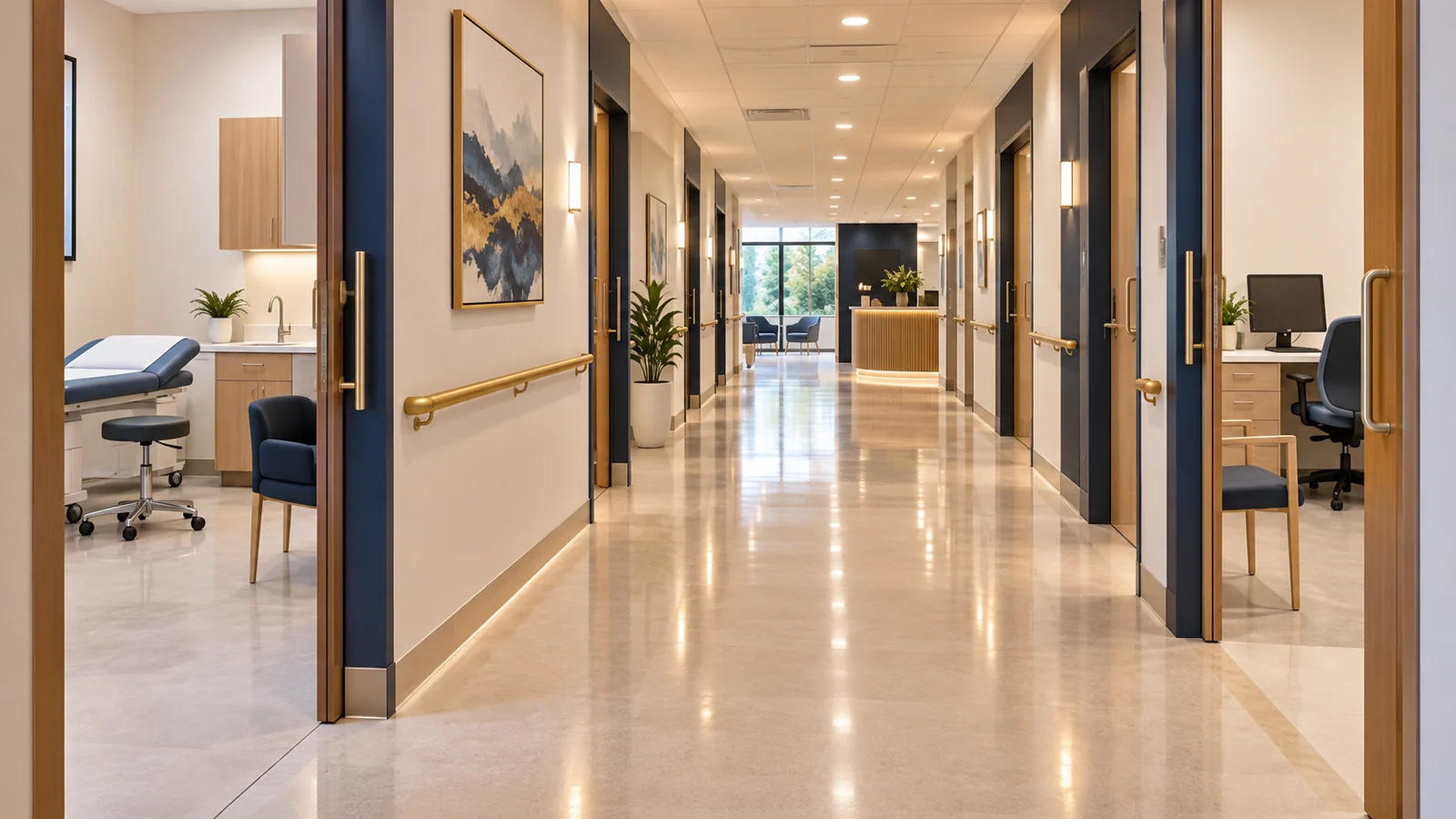
Our most booked program
Medical centres and GP practices
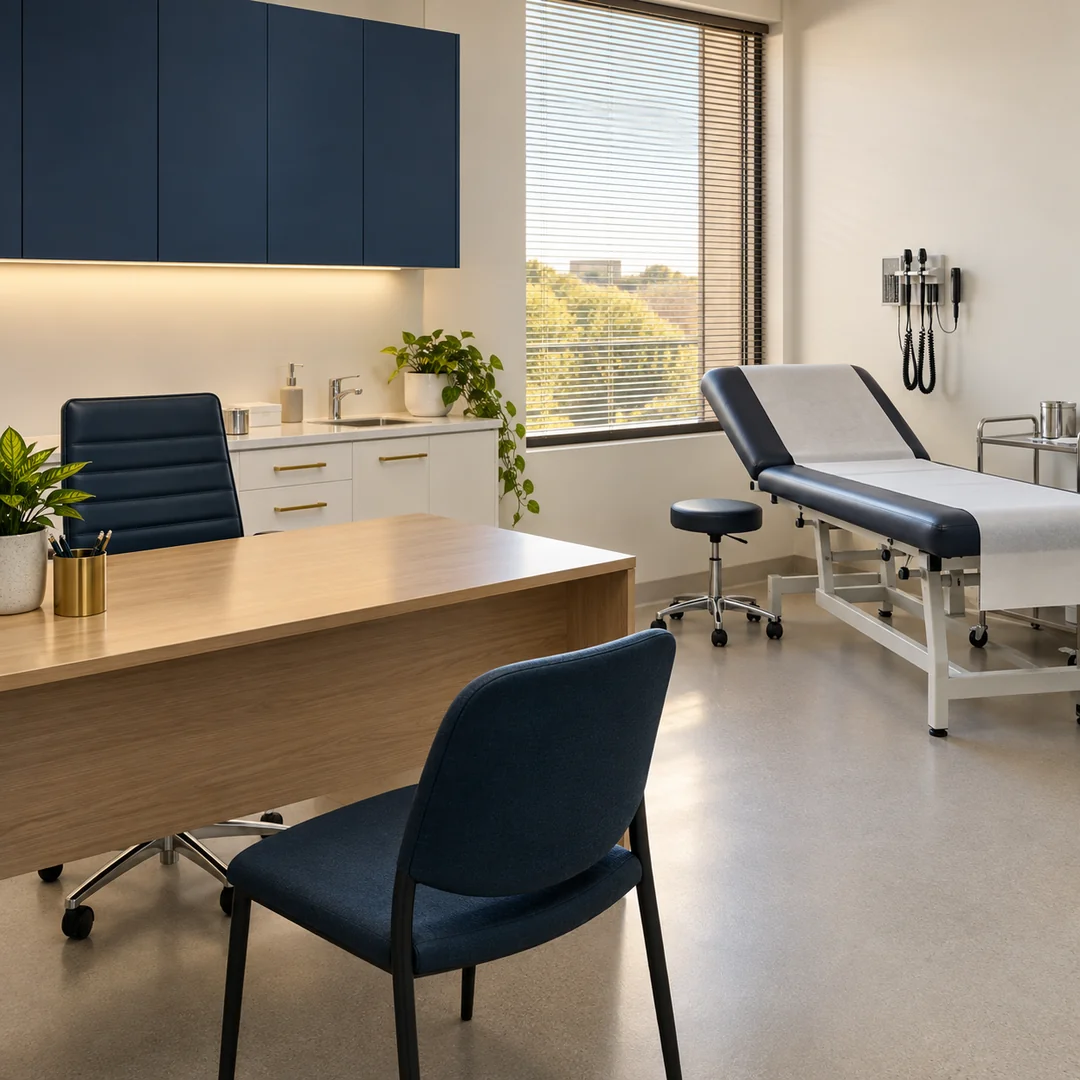
Busy general practices share treatment rooms between doctors and nurses, keep a vaccine fridge area and run a waiting room that sees hundreds of people a week. We plan the clean around your last session and your nurse's room set-up, cleaning around clinical equipment and leaving each room ready for the first booking.
- Treatment couches, trolley tops and sink surrounds left wet for the label time
- Waiting room chairs, armrests, play corners and the front counter
- Patient toilets, hand basins, soap and paper towel stock

Suites inside commercial buildings
Medical offices and consulting suites
Specialist rooms often sit several floors up in a commercial tower, where building management controls lifts, loading docks and after-hours entry. We register our crew with the building, follow its contractor rules and keep your suite's equipment separate from the base-building cleaner's trolley.
- Consult desks, keyboards, phones and shared pens
- Examination couches, stools and trolley surfaces
- Reception counters, glass partitions and entry doors
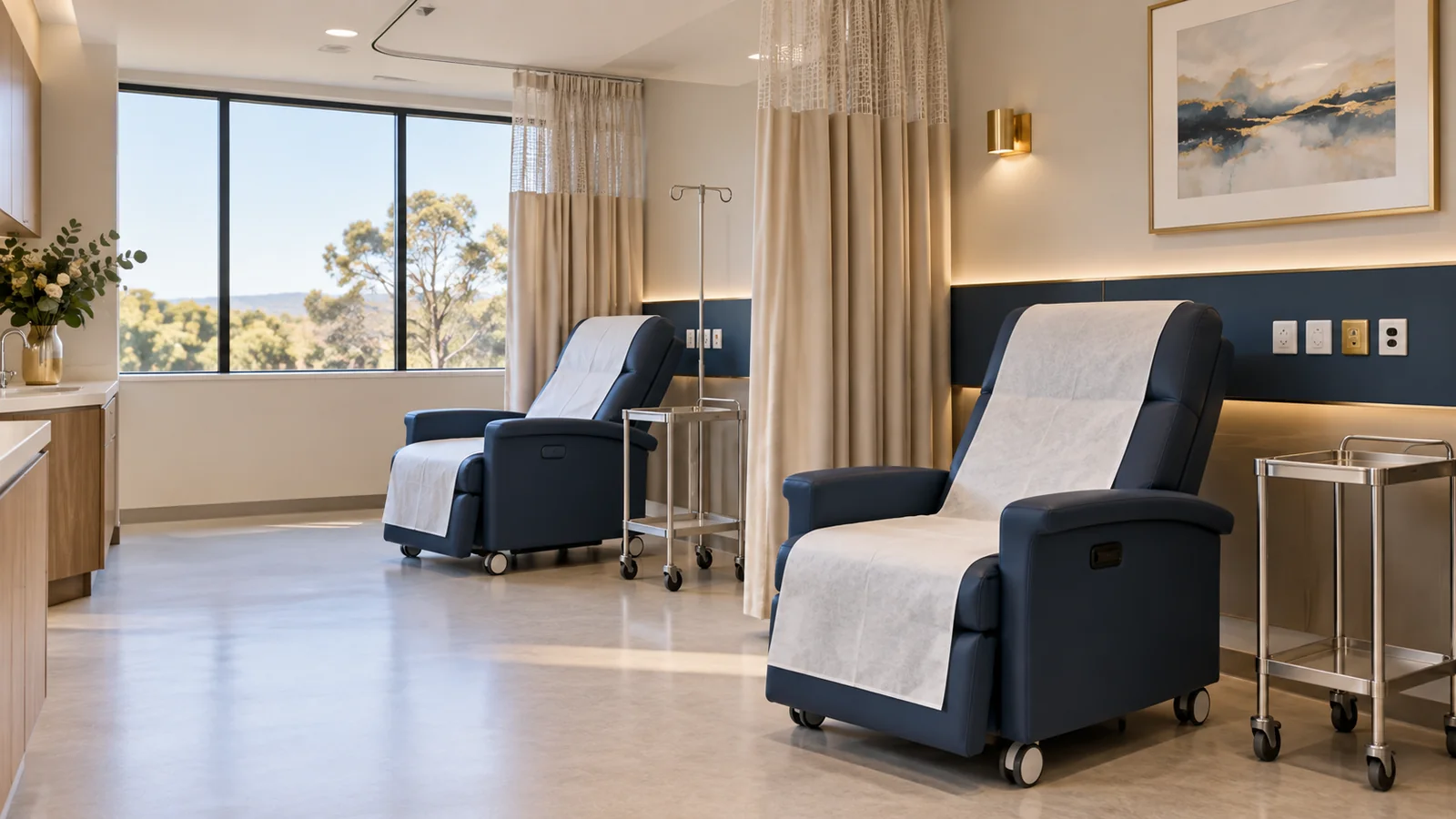
Procedure rooms and recovery chairs
Specialist and day clinics
Skin, eye, cosmetic and similar specialist clinics usually run a procedure room and a small recovery area alongside ordinary consult rooms. Those rooms get their own colour, their own place in the sequence and extra time on the surfaces closest to the patient.
- Procedure room floors, benches and light switches
- Recovery chairs, side tables and call points
- Linen and consumable restocking, if you want it
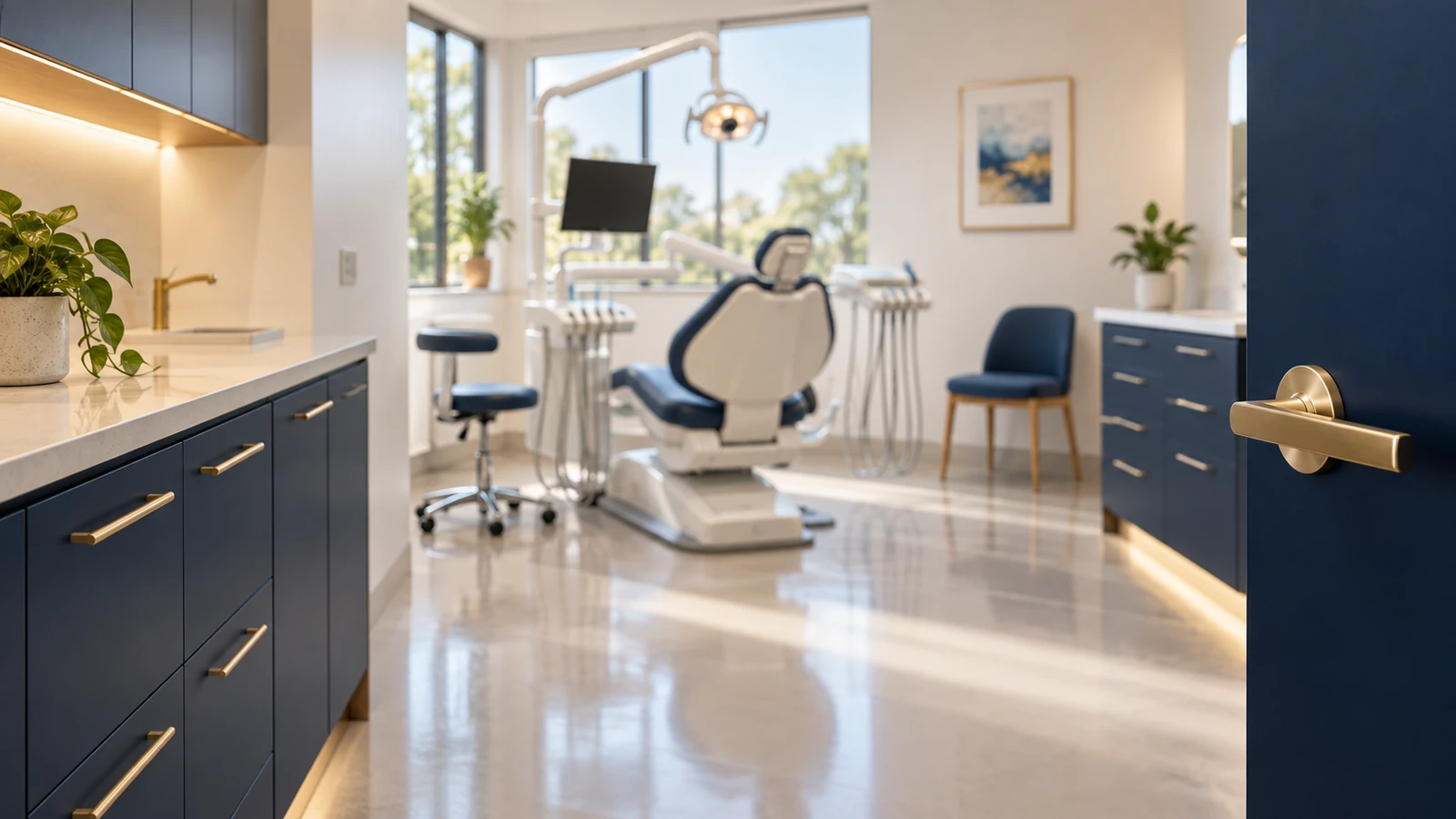
Surrounds, not the chair
Dental clinics
We clean surgery floors, cabinetry fronts, reception and the benches your team has already cleared in the sterilising room. The dental chair's clinical surfaces, handpieces and the steriliser itself stay with your dental assistants under your own infection-control protocol. That split is written into the quote.
- Surgery floors, skirting and cupboard fronts
- Door handles, light switches and patient seating
- Waiting room, bathrooms and staff areas
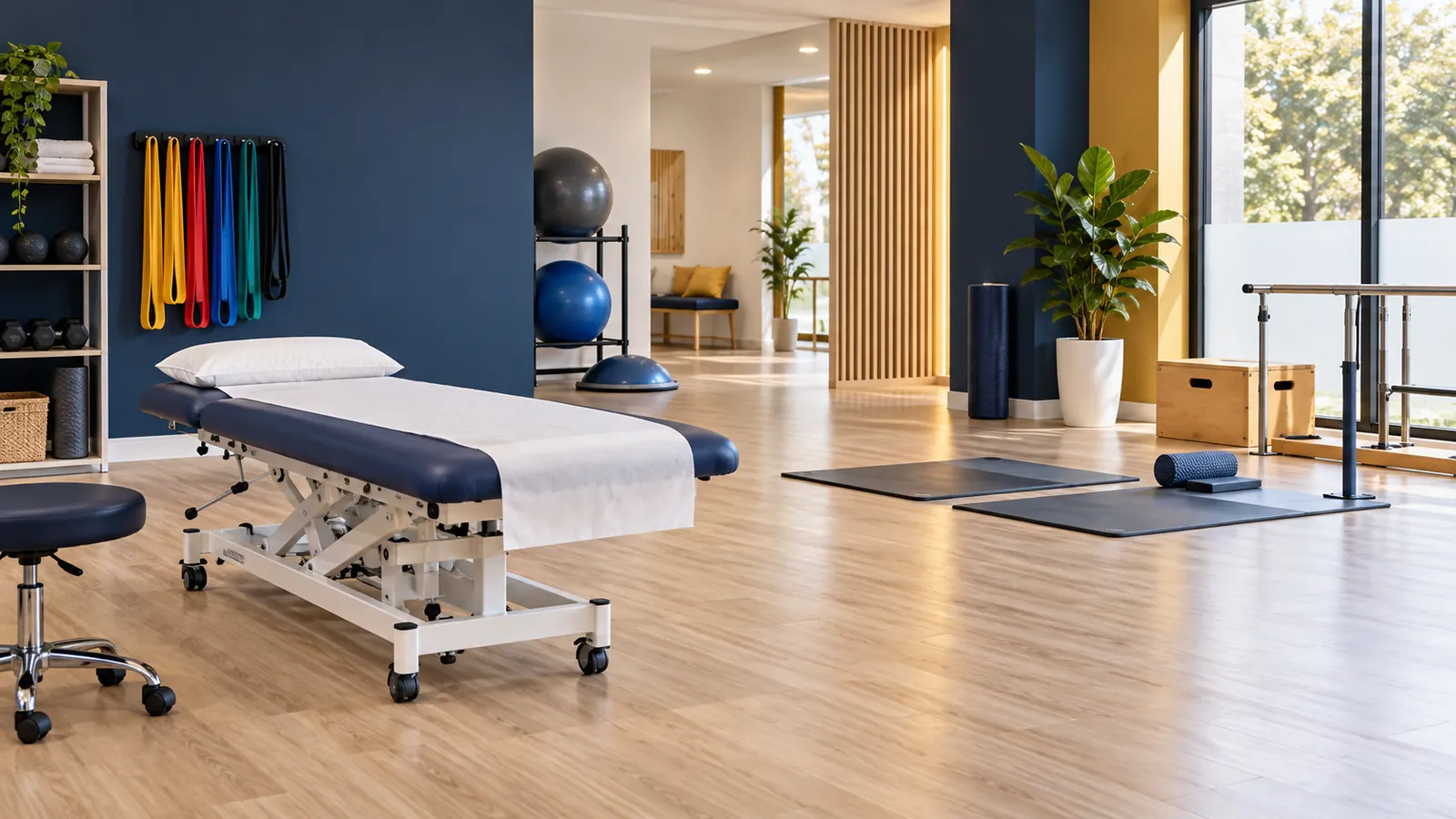
Plinths, mats and collection chairs
Allied health and pathology rooms
Physio, podiatry, psychology and pathology collection rooms all come with their own pressure points: plinths and gym equipment, podiatry chairs, soft furnishings and collection chairs used many times a day. Collection-room routines are agreed with the pathology provider before the first visit.
- Plinths, exercise mats, weights and balance equipment
- Podiatry and collection chairs, armrests and stools
- Soft seating and quiet rooms in psychology practices
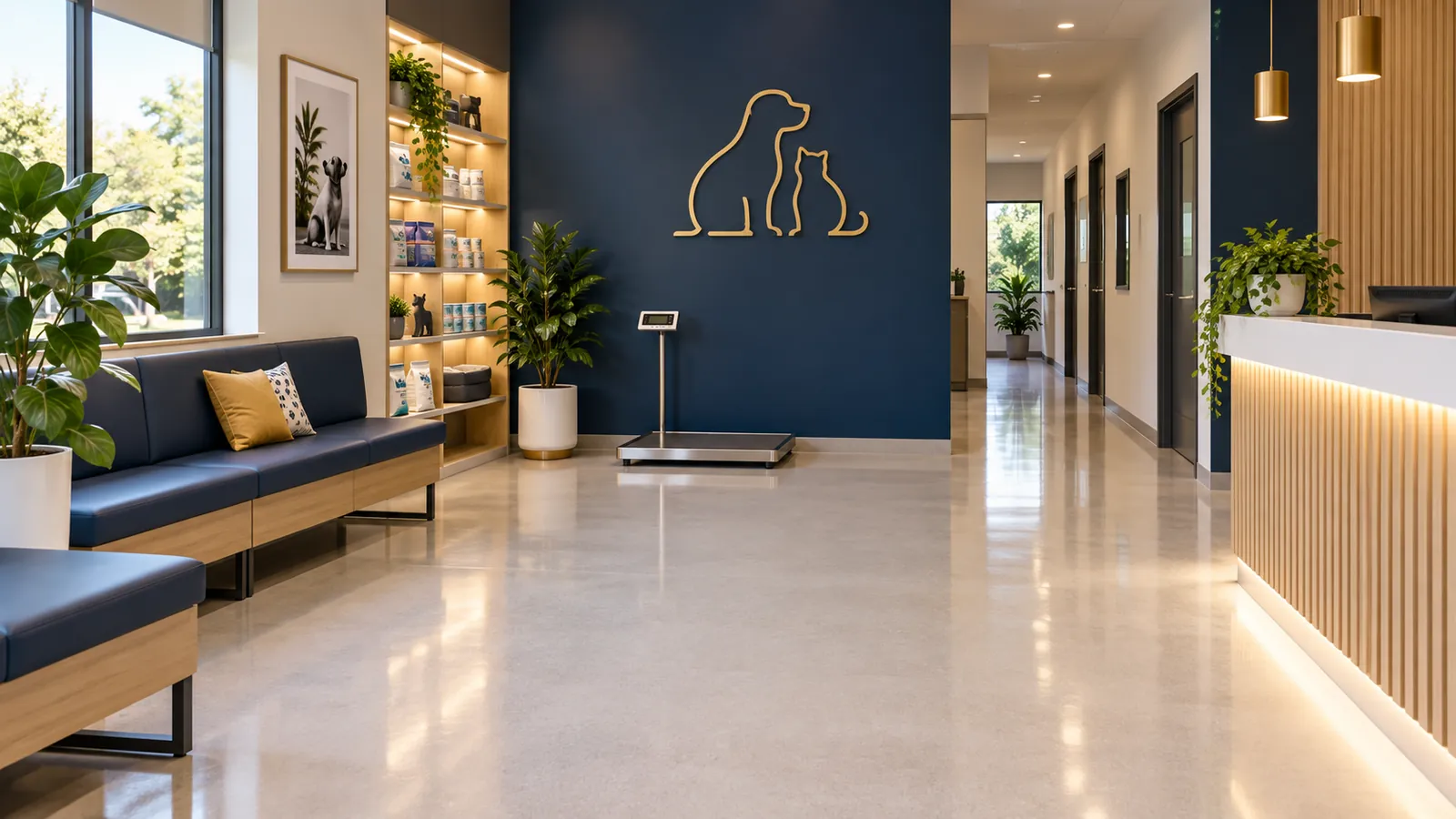
Hair, odour and shared waiting rooms
Veterinary clinics
A waiting room shared by nervous dogs and cats needs a routine of its own. We clean consult rooms, reception, waiting areas and staff spaces, and agree with your nurses which kennel, isolation and surgery areas stay with the clinical team.
- Hard floors, skirting and bench seating
- Consult tables' surrounds, scales and door handles
- Staff kitchen, toilets and laundry area floors
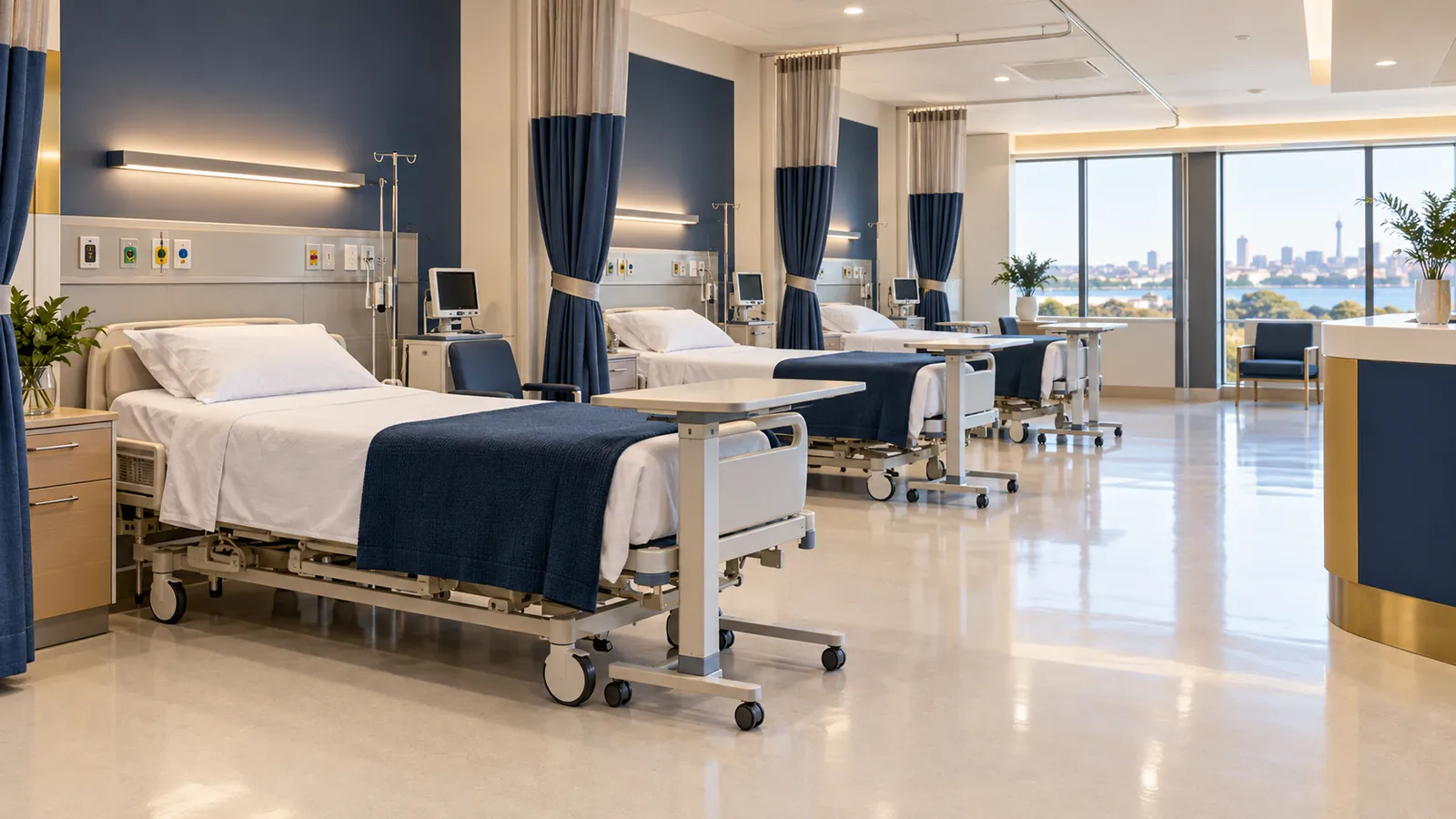
Scoped with the facility first By arrangement
Day surgery facilities
Recovery bays, corridors, waiting rooms and staff areas in day procedure centres. Operating theatres follow the facility's own perioperative cleaning protocol, so we meet your nurse unit manager, agree what sits with us and only quote once that split is on paper.
- Recovery bays, bed surrounds and curtain tracks
- Admission and discharge areas
- Corridors, change rooms and staff amenities
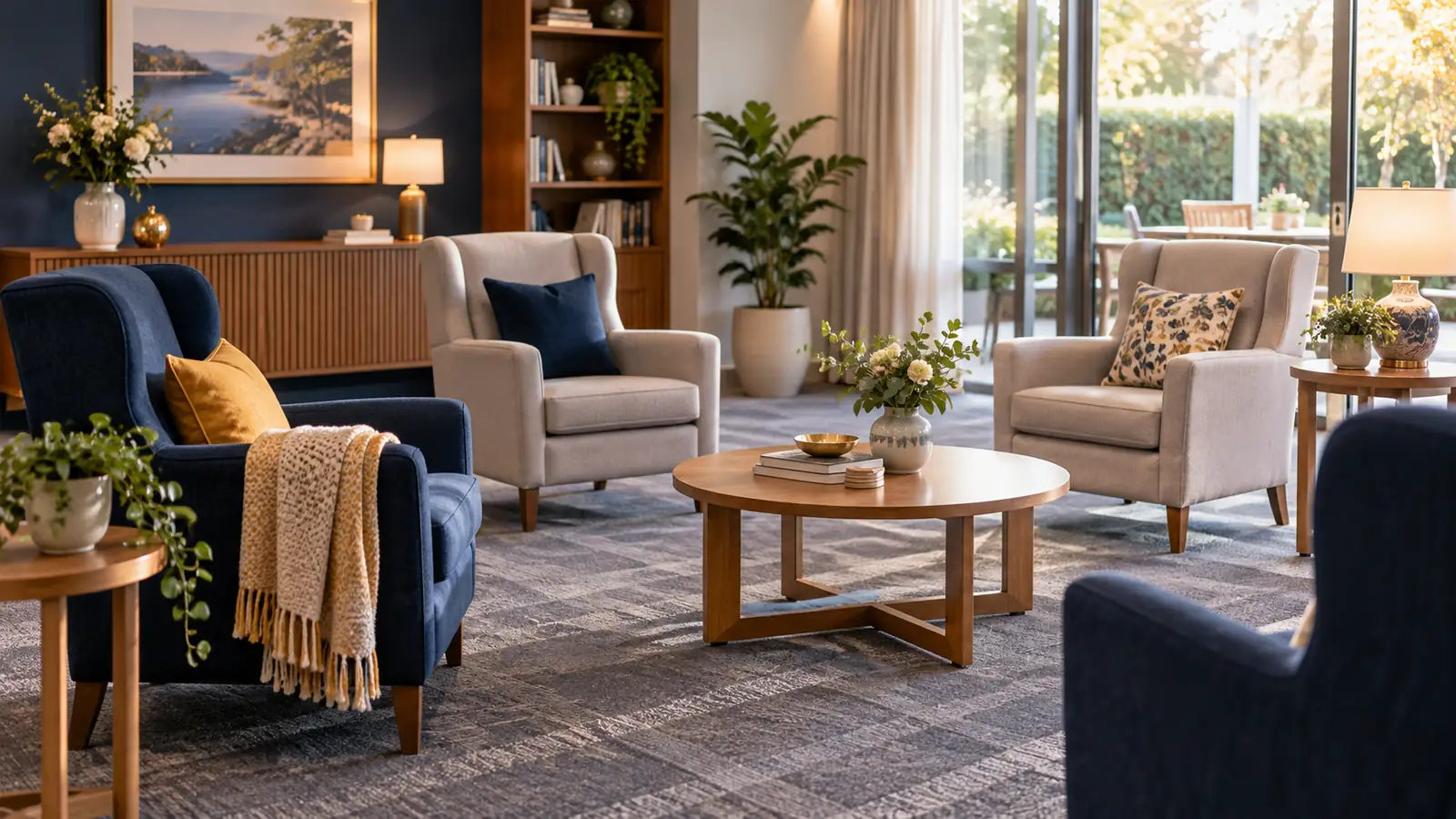
Where people live By arrangement
Aged care and NDIS facilities
Shared lounges, dining rooms, therapy rooms and offices in aged care homes and NDIS-funded facilities. Residents live here, so noise, timing and privacy matter as much as method. Worker screening requirements are confirmed with each provider before any crew attends.
- Lounges, dining rooms and handrails
- Therapy rooms and shared bathrooms
- Offices, nurse stations and staff rooms
Plenty of newer medical centres mix several of these under one roof: a GP floor, a physio and a podiatrist down the hall, a pathology collection point by the entrance and a pharmacy next door. We quote that as one program with a zone plan for each tenancy, so each practice knows exactly what it is paying for and who cleaned its rooms.
Each facility page explains what gets cleaned, how often, and which tasks stay with your clinical staff. If your building does not fit neatly into one box, send us the floor plan with your quote request and we will tell you honestly whether the job suits us.
How does our infection-control cleaning method work?
The method rests on four habits. We zone every room, give each zone colour-coded equipment, use TGA-listed disinfectants for the full contact time on the label, and wipe mapped touchpoints in a set order. The same steps happen on every visit, whoever is on the crew.
Clinical rooms are marked yellow, toilets red, kitchens green and everything else blue. Each colour has its own kit.
Cleanest first, dirtiest last: front of house, consult rooms, clinical rooms, corridor, then toilets. The kitchen uses a separate green kit.
Gold dots mark mapped touchpoints: door handles, switches, counter edges, taps and couch rails. Each is wiped on every visit.
Zoning
Before the first visit we walk the practice and mark each room clinical or non-clinical on a floor plan. Treatment and procedure rooms get more time and a stricter order. The plan lives in the site folder, so a relief cleaner works from the same map as the regular crew.
Colour coding
Our code runs red for toilets and basins, yellow for clinical rooms, blue for general areas and green for kitchens. A red cloth never enters a treatment room. Codes differ between organisations, so if your infection-control policy already sets one, we follow yours.
Products and contact time
Clinical areas get TGA-listed disinfectants, recorded on a product register with their safety data sheets. Each label states a contact time, and the surface stays wet for that long before it is wiped. Skipping that wait is the shortcut we see most often in practices that come to us.
Touchpoint mapping
Door handles, switches, chair arms, couch rails, keyboards, taps and card terminals are listed room by room. Crews work clean to dirty and high to low, so a surface that has been wiped is not touched again by a used cloth.
When the routine is not enough
Some weeks call for more. After a known infectious case, a leak or a fit-out, an infection-control deep cleaning visit resets the whole site, including the high and low surfaces a nightly program reaches only on rotation. We agree the scope with your practice nurse first, because the right response depends on what happened.
For the reasoning behind each step in plain terms, read our guide to infection-control cleaning basics for practices. The TGA also explains how listed disinfectants are regulated in Australia, including what the AUST L number on a label tells you.
What will we never do in your practice?
We never reprocess or sterilise instruments, handle sharps, remove or transport clinical waste, or take on public hospital contracts. Those jobs belong to your clinical staff and licensed contractors, and we say so before you sign, not after something goes wrong.
Cleaning, reprocessing or sterilising instruments
Touching sharps or sharps containers
Moving, bagging or transporting clinical waste
Cleaning inside medical devices
Public hospitals and home care
Clinical and related waste is treated as reportable priority waste in Victoria, and moving it needs a transport permission from the regulator. EPA Victoria sets out how clinical and related waste must be managed, which is why a cleaning crew should never carry a yellow bin out to the van, however helpful it seems at the time.
Clear lines protect your practice as much as ours. An accreditation surveyor will ask who handles each waste stream and who cleans which equipment, and the answer should never be the cleaner, sometimes. If your current cleaner has been emptying sharps containers or wiping instruments, tell us at the walk-through and we will help you hand those tasks back properly.
What cleaning records will you have for accreditation?
Every visit produces a signed log showing the date, crew, zones cleaned, products used and any issue found. You also get a product register, safety data sheets, the zone plan and a monthly summary, so the cleaning evidence for your accreditation file is already written.
General practices are assessed against the RACGP Standards for general practices, and surveyors look for proof that cleaning is scheduled, done and checked. Day procedure services work under the ACSQHC's Preventing and Controlling Infections Standard. We do not accredit anyone and cannot promise an outcome. What we can do is hand you records that show what happened, room by room, without a late night before the survey.
The page written for practice managers lays out the onboarding pack and how we deal with a missed task, and our plain-English guide to medical cleaning standards in Australia sorts out which documents apply to which kind of practice.
| Zone | Tasks | Product | Done |
|---|---|---|---|
| Waiting | Chairs, armrests, counter, card terminal | Neutral detergent | Yes |
| Consult 1, 2 | Desks, keyboards, handles, floors | Neutral detergent | Yes |
| Treatment | Couch, trolley top, sink, switches | Listed disinfectant, label time | Yes |
| Procedure | Benches, light, floor, door | Listed disinfectant, label time | Yes |
| Toilets | Pans, basins, taps, dispensers, restock | Washroom disinfectant | Yes |
| Kitchen | Benches, sink, fridge handle, floor | Kitchen detergent | Yes |
Note for morning staff: sharps container in treatment room at fill line. Not touched.
- Signed log for every visit
- Zone plan and cleaning schedule
- Product register with SDS
- Issue and maintenance notes
- Monthly summary, misses included
- Insurance certificate on request
How do after-hours and daily cleaning programs run?
Most practices book a daily after-hours program. The crew arrives once the last session ends, cleans in zone order, restocks, fills in the log and locks up. Smaller suites often choose three visits a week, with a deeper rotation built into one of them.
- Last patient leavesStaff clear benches and lock away files
- Crew signs inReads the handover book and alarm notes
- Blue zonesWaiting room, reception and consult rooms
- Yellow zonesTreatment and procedure rooms, label times kept
- Red zonesToilets and basins with the red kit
- Green zoneStaff kitchen and break room
- Log and lock-upRestock, sign the log, set the alarm
Consistency matters more than speed. We aim to send the same crew to your practice each night, because a cleaner who knows that Consult 3 has a sticky sink plug or that the nurse leaves the vaccine fridge area taped off will do a better job than a stranger with a checklist. When someone is on leave, the relief cleaner works from your zone plan and handover book.
Keys, fobs and alarm codes are signed out and logged, and doors are never propped open while the crew moves between zones. Crews are briefed on patient privacy, so screens, files and appointment lists are never moved or read. Crew immunisation expectations are agreed with each practice to match its own staff policy.
Weekend sessions, extended-hours clinics and practices that open at 7am all fit, as long as the timing is agreed up front. The full detail on scheduling sits on our page about after-hours medical cleaning programs.
| How often | What is added |
|---|---|
| Every visit | Zone clean in order, touchpoints, floors, bins, toilets, restocking, visit log |
| Weekly | Skirting boards, chair legs and bases, door frames, internal glass |
| Monthly | High dusting, vents and diffusers, window tracks, under fixed furniture |
| Quarterly | Hard floor scrub, upholstery spot cleaning, blind wipe-down |
| As agreed | Carpet extraction, strip and seal of vinyl, post-works clean |
Which parts of Melbourne do our crews cover?
We cover metropolitan Melbourne in five regions: the CBD and inner suburbs, the northern corridor, the west, the east around Box Hill, and the south-east around Clayton. Practices just outside those regions can still ask, and we quote if a crew can reach you reliably every night.
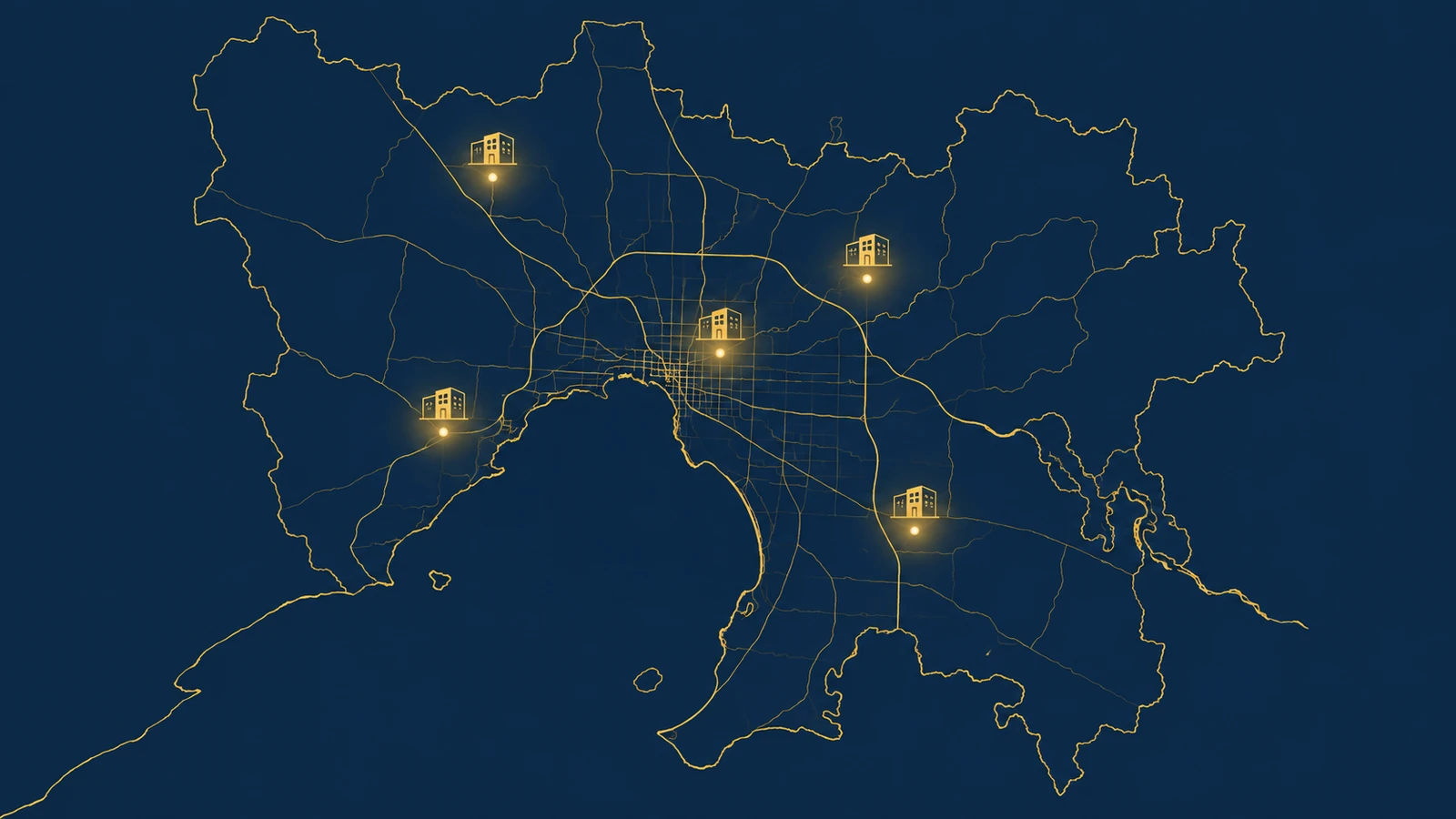
Distance matters less than access. A suite behind a building's security desk can take longer to reach than a clinic 30 kilometres out with its own car park, so we plan crews around entry rules as well as travel. The full list sits on our areas we serve page.
Medical cleaning in Melbourne CBD and inner suburbs
Specialist suites stacked in older Collins and Spring Street buildings, plus clinics in Carlton and Richmond. Entry runs through building management and lift bookings, so we lodge contractor details before night one.
Northern suburbs
Large bulk-billing medical centres along the Hume corridor, many open late and at weekends. Broadmeadows and Epping practices run long days, so crews start later and finish before early staff arrive.
Western suburbs
Fast-growing suburbs where new medical centres share buildings with pharmacies and allied health. Newer fit-outs out west bring big waiting rooms and vinyl floors; older Footscray clinics bring stairs and tight storerooms.
Eastern suburbs
The Box Hill hospital precinct supports a dense ring of specialist rooms, imaging and allied health, with family GP clinics spread through Doncaster, Ringwood and Glen Waverley.
South-eastern suburbs
Consulting suites clustered around the Clayton health and university precinct, plus large family practices in Dandenong, Berwick and Frankston that often run two or three buildings.
What does medical cleaning in Melbourne cost?
Medical cleaning in Melbourne is usually priced per visit. The figure moves with the number of rooms, the share of clinical rooms, visits per week, floor types and building access. We give a fixed per-visit price after a walk-through, never an open-ended hourly estimate.
| Price driver | Why it changes the price | Where you notice it most |
|---|---|---|
| Rooms and floor area | More rooms means more touchpoints, bins and floors per visit | Large GP clinics and multi-tenant centres |
| Clinical share | Treatment and procedure rooms take longer because of contact times and stricter order | Specialist clinics with a procedure room |
| Visits per week | Daily programs spread set-up and travel across more visits, so each one costs less | Practices open five or more days |
| Floors | Carpet needs vacuuming and periodic extraction; vinyl needs scrubbing and sealing | Older fit-outs with carpeted consult rooms |
| Access and timing | Building sign-in, lift bookings and late starts add time on site | CBD towers and extended-hours clinics |
| Consumables | Soap, paper towel and liners can be supplied by you or by us at cost | Busy waiting rooms and patient toilets |
Relative time per room, by facility
A guide to effort, not a price list.
What every written quote spells out
So there is nothing to argue about later.
- A fixed price per visit and the visits per week
- Your zone plan and the rotation schedule
- Products we will use and who supplies consumables
- Tasks that stay with your staff, in writing
- Start date, notice period and how misses are fixed
We do not publish a rate card, because two practices with the same room count can take very different amounts of time. A suite with four carpeted consult rooms is a quick job. A clinic with two procedure rooms, a recovery area and a waiting room full of fabric chairs is not.
What we can show you is how the maths works. Our page on medical cleaning cost walks through the per-visit logic for each facility type, so you can sense-check any quote you receive, including ours.
Why do practices switch from generic cleaners?
Practices usually switch after a run of small misses: one cloth used everywhere, bins emptied but touchpoints skipped, no record when the surveyor asks, and a different face every week. The fix is method, consistency and paperwork, not a longer checklist.
Six questions to put to any medical cleaner, us included
How to choose a medical cleaning company- How will you zone my rooms?Ask to see an example zone plan, not a promise that one exists.
- Which disinfectants, and what contact time?Product names, AUST L numbers and the label times should come without a pause.
- What will you refuse to do?A good answer names sharps, clinical waste and instruments straight away.
- What do I receive after each visit?Look for a signed log, not just a text message saying the job is done.
- Who comes, and are they checked?Ask about police checks, induction and whether the crew stays the same.
- What happens when something is missed?You want a named contact, a time frame and a note in the monthly summary.
What happens when you ask us to price your practice?
Tell us your facility type, number of rooms, session times and access arrangements through the form. We book a walk-through, then send a fixed per-visit price in writing within 24 hours of it, with the zone plan and scope limits attached.
- 1Tell us about the practiceA few details about rooms and hours are enough to start. A floor plan helps if you have one.
- 2Walk-through on siteAround 30 to 45 minutes with you or your practice nurse, usually before or after sessions.
- 3Written quote and start dateA fixed price per visit, your zone plan and a start date that fits your current cleaner's notice period.
Prefer to read more first? Find out who we are and how crews are trained, or browse our medical cleaning guides for checklists and plain answers on standards.
- Facility type
- Number of rooms
- When sessions finish
- Access and alarm set-up
What do practice managers ask before booking?
These are the questions we hear most in the first call. Anything else is best answered in person, at your practice, during the walk-through.
Arrange a walk-throughHow is medical cleaning different from office cleaning?
Medical cleaning follows infection-control method, and office cleaning usually does not. We split rooms into clinical and non-clinical zones, use colour-coded cloths and mops for each, leave disinfectants on for their labelled contact time and log every visit. Office crews tend to use one kit throughout and work to appearance rather than sequence.
Do you use TGA-listed disinfectants?
Yes. The disinfectants we use in clinical areas are included on the Australian Register of Therapeutic Goods, so each label carries an AUST L number. We keep a product register and safety data sheets at your site, and we are happy to switch to a product your infection-control policy already names.
Can you clean after our last session ends?
Yes, after-hours work is our default. Crews arrive once your last patient has left, whether that is 6pm on a weekday or later for extended-hours clinics, and Saturday visits suit practices that open on weekends. Start times are fixed in the quote and kept steady from week to week.
Do you handle sharps or clinical waste?
No, never. Sharps containers and clinical bins stay with your staff and your licensed waste contractor. Our crews empty general waste and recycling only, and if a sharps container looks full or damaged we write it in the visit log so your team can deal with it before patients arrive.
Can your records support our accreditation?
They can support your evidence, but no cleaner can guarantee an accreditation result. You receive signed visit logs, your zone plan, a product register with safety data sheets and a monthly summary. That shows a surveyor what was cleaned, when and with what, which is the part many practices struggle to prove.
Do you clean dental and allied health rooms?
Yes, within clear limits. In dental surgeries we clean floors, cabinetry fronts and surrounds, while chairs, handpieces and sterilising equipment stay with your dental team. Physiotherapy, podiatry, psychology and pathology collection rooms each get their own zone plan, agreed with you before the first visit.
Are crews police-checked?
Yes. Every crew member holds a current national police check before setting foot in a practice, and we can show you the check dates for anyone assigned to your site. Crews are also briefed on patient privacy, so files, screens and appointment books are left exactly where they are.
How fast can you quote?
Your price arrives in writing within 24 hours of the walk-through, and most walk-throughs happen within a few working days of your enquiry. Simple consulting suites can sometimes be priced from a floor plan and a handful of photos, which takes a step out of the process.